

During the month of June 2016, ANZ sponsored a street art project called Inspiring Locals – which highlighted locals who are making a difference within their communities. This project was coordinated by Melbourne art consultant, Alex McCulloch.
Four street artists where selected for the project, Luke Cornish (ELK), Kaff-eine, Adnate & Stormie Mills. Each artist selected a person who they thought aligned with ANZ’s vision statement of diversity, inclusion and respect as everyday priorities, both inside the workplace and out.
The four artists where assigned walls around Sydney;
- ELK – Father Dave in Martin Place and conductor Dr Nicholas Milton at Chatswood;
- Kaff-eine – LGBTI activist Katherine Hudson at Bondi Junction;
- Adnate – Aboriginal activist Jenny Munro at Haymarket; &,
- Stormie Mills – retired Parramatta Eels player and community activist Nathan Hindmarsh at Parramatta.
The project is important for many reasons but here I want to discuss just three: the creation of community, knowledge production and, pure enjoyment.
The creation of community emerges through each inspiring local and the positive impact
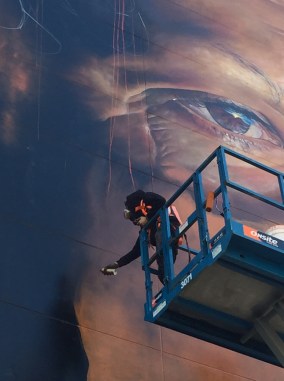
that they have made on their community. This can be seen in Father Dave’s ongoing fight for refugees, Katherine Hudson’s ‘wear it purple’ campaign, Dr Nicholas Milton’s work with breaking the barrier of classical music with young people, Jenny Munro’s work with the indigenous community and Nathan Hindmarsh’s contribution to the mental health and the end of violence towards women.
Second, the knowledge production emerges as the works created by the artists are a visual way of illuminating what these inspiring locals have achieved. Through creating these portraits and placing them in the public domain, those who view the artworks have the opportunity to learn about both these individuals and their work. The conversations that follow create knowledge production through community engagement.
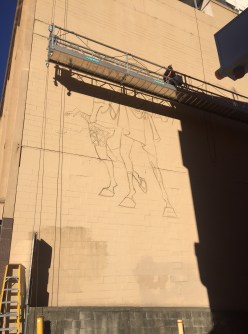
Thirdly, pure aesthetic enjoyment! for me, street art is way of exiting the gallery spaces and bringing art to the everyday. Gallery spaces, whether they be private or public, are not always welcoming. I stood and watched the public interaction with Luke Cornish’s Father Dave portrait and the conversations that following including statements such us: ‘wow, that piece is wonderful’; ‘glad they added some art to Martin Place’; questions around Father Dave and his work; ‘how did the artist create the piece’ and many more.
This leads back to the sense of community and the conversations that can be created through an image in the urban landscape.
My argument is simple: street art at its best creates a disruption of our thoughts from the everyday, allowing the public to engage in new conversations.
 Alix Beattie: Street Art Researcher