
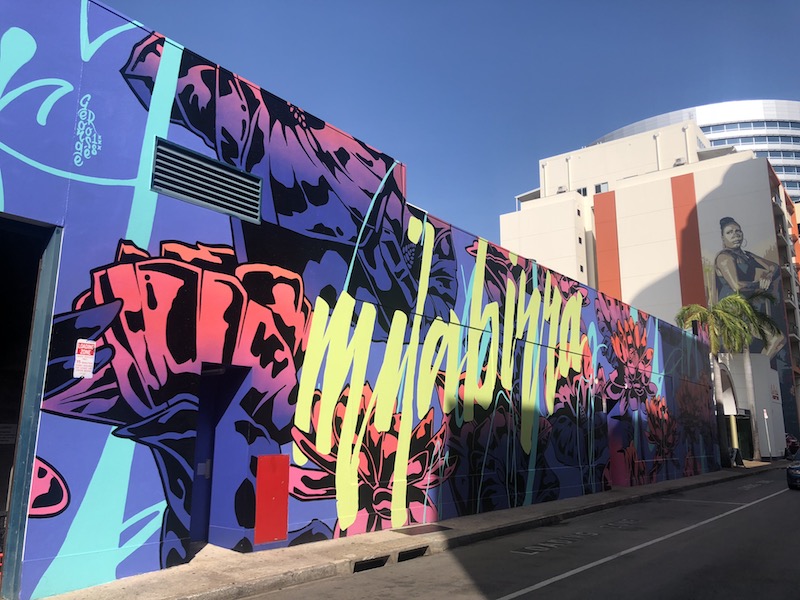
September 2018 saw street artists, both local and international, head to Northern Australia to participate in the Darwin Street Art Festival. The festival, which was held on the 15-16 September, included live music, family activities and the chance to see street artists creating their murals in the heart of Darwin. The festival turned the boring back laneways of Darwin into an urban gallery and included imagery of some of the well-known locals, Australian fauna and flora as well as a series of abstract designs.

Image by the author
Street art has the ability to tell a story, convey a message and liven concrete walls that are contained within our cities. The artworks act as a vehicle to create conversations between the artist and the audience. These conversations have always intrigued me as I find myself asking questions such as: What is the artist trying to tell me? Why have they selected this imagery? What inspires them?
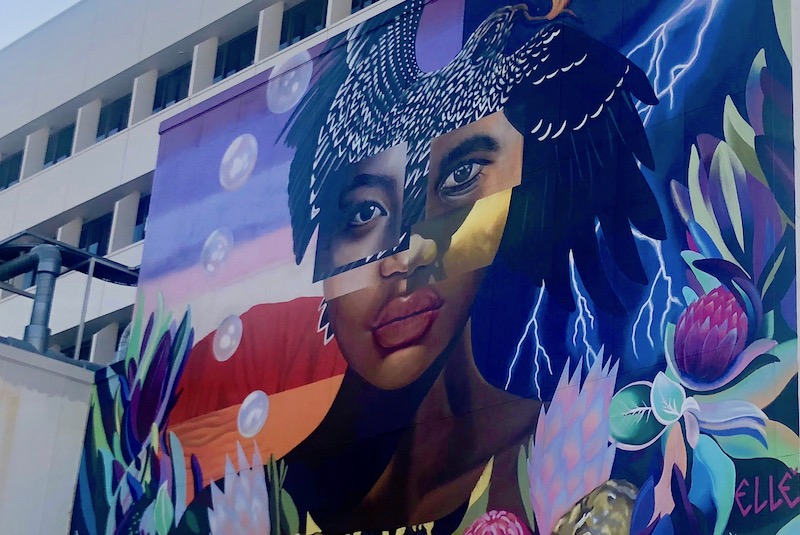
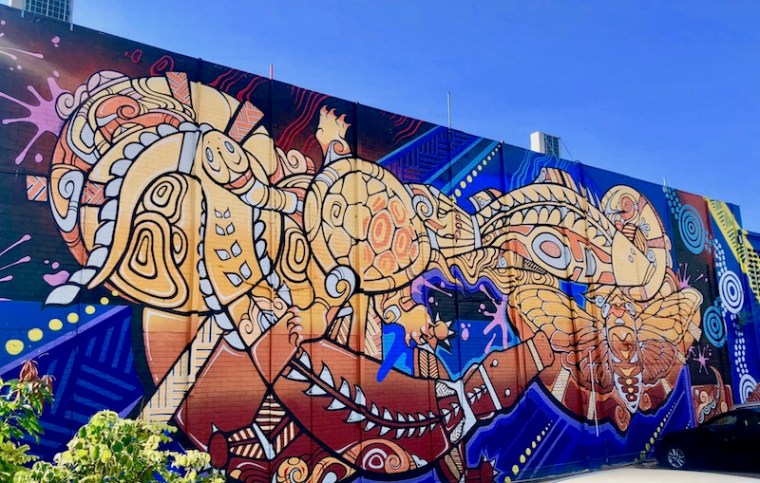
This was my motivation for heading to the Darwin Street Art Festival.
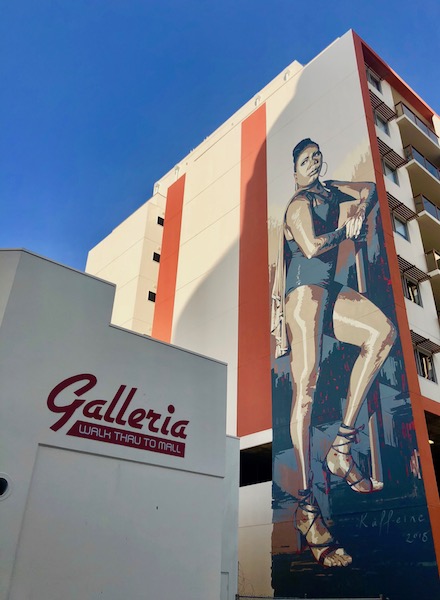
One of the artists involved was Kaff-eine, one of five artists that I interviewed for my Master of Research Thesis,Women on Walls: Engaging street art through the eyes of female artists.
Kaff-eine’s subject was Shaniquá (see below). Shaniquá is a transgender Indigenous women from the Tiwi Island which is just north of Darwin.
Kaff-eine, a lawyer turned artist, uses her artform to create awareness around people that she sees as marginalised within communities. Her past projects have included raising awareness of the LGBTIQA community through ANZ’s Inspiring locals program, various human rights organisations and communities dealing with poverty, specifically looking at communities in the Phillipines.
Through Kaff-eine’s various projects, the audience is challenged to reflect on the many issues she raises: from poverty and marginalisation, to issues of sexuality and exclusion. It is for such reasons that street art is more than just an aesthetic intervention into our urban landscape: it is also about having conversations in the public sphere, interrupting the everyday and acting as a mirror on our society.
 Alix Beattie: Street Art Researcher