
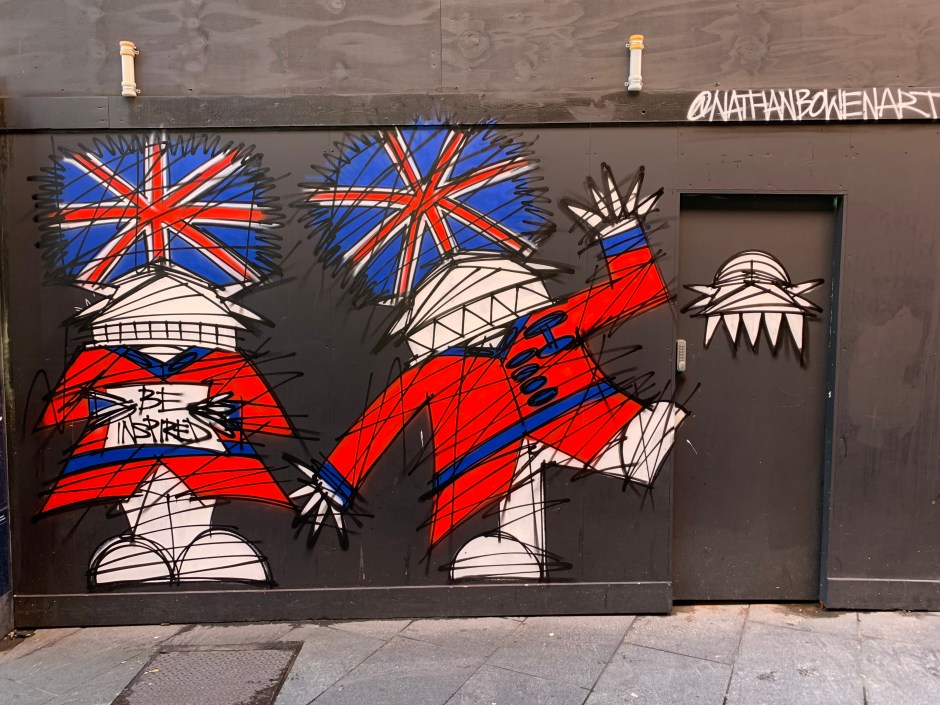
Shoreditch, is a suburb in London that embraces street art and graffiti: wall upon wall is covered with tags, pieces, murals, sculpture and paste ups. It is a feast for your eyes and moves between stylized pieces and vibrant imagery, to political commentary about what is happening around the world (including some not so complementary images of Boris – the UK’s Prime minister).
To my surprise, there are also a significant number of paid advertising images: that is, corporations paying artists to paint a wall instead of using a traditional billboard.
While recently visiting London as part of my research, I was inspired by an article that discusses the role of street art tours. Andron examines the function of the street art tour industry and argues that, these operators are creating a “touristifcation and gentrification” of the subculture and the environment that… (they) exist in (2018, p.2).
In reflecting on Andron’s arguments, I contemplated whether this was problematic or beneficial to local suburbs? Do these tours benefit the local economy by bringing in additional people to the suburb who would otherwise not visit?
The research focused Shoreditch – hence why I wanted to go there – and found that the success or failure of the tours were based on both the tour guide and the company for whom they worked for. What was taken into account was the content: the ability of the guide (knowledge and entertainment qualities) and the reliability and trust of the organisation. Success was also dependent on online details, the company’s website and reviews and ratings from previous customers.
One of the key points of Andron’s argument is that when street art is accepted within a place, it helps shape the identity of this area.
This article got me thinking about my research and the way that street art has the ability to activate cities. While the activation that interest me does not center on tours, but more so for the creation of conversations with the selected audience. I decided to take two tours whilst in the area – one paid and one free – to compare the locality of the tour, information provided and the main focus (that is, street art or graffiti).
The tour
On the train arriving into Shoreditch, I was like a child with my face squidged against the train window taking in the immeasurable amounts of graffiti and street art.
I went on a street art tour with Strawberry Tours, with our guide Ollie, and this took us on a tour through the suburb. Ollie stated the area is always changing in both respect to the works and the shape of the neighborhood as it is continually becoming gentrified.
Defining whether street art is identified as benefiting the neighborhood or vandalizing it shapes how the community responds.
The tour was large – with about 20 people of mixed aged and genders. Though there was no cost, at the end attendees paid the amount they thought it was worth. This tour was perfect for getting my bearings around such a large neighborhood.
The next day I went on a paid tour with Street Art London Tours. The guide was Dean who is heavily involved in graffiti and street art in and around the Shoreditch area. This tour only had 5 people in total. This tour was incredibly informative about works and what is happening in the area.
The two tours provided different aspects, opinions and information including:
- Locality
The tours crossed paths on multiply works though the both walking routes were incredibly different. Strawberry Tours (ST) stayed on the more travelled path whereas London Street Art Tours (LSAT) went down the back streets and roads less travelled. By this I mean the back streets and where there was more graffiti and where you can see pieces stacked on top of each other. There were people painting where we were and even at night the smell of spray-paint was in the air with multiply crews working on different works.
2. Information
As tours go, both ST & LSAT were informative. I did feel, however, that LSAT was more engaged with the artistic community, though both promoted various other businesses (ST suggested other tours they had on offer (for example, a Jack the Ripper Tours) & LSAT suggested the different galleries in the area). When I spoke to LSAT about my PhD research, Dean was enthusiastic while Ollie from ST was less engaged. While this may be a direct result of the size of the tour, LSAT pointed me in the direction of various female artists while ST said there wasn’t that many around.
3.Street Art or Graffiti
ST focused on murals while LSAT was quite even in regard to all types of street art. ST knew a few of the artist in person. LSAT knew quite a few artists who stopped to talk to us along the way.
Overall both tours were interesting for different purposes. If someone had an interest in street art but didn’t know much about the art form, ST gave a great oversight of the area. It was heavily dominated by murals. LSAT had a more information and stories about the artists and the works varied between street art and graffiti.
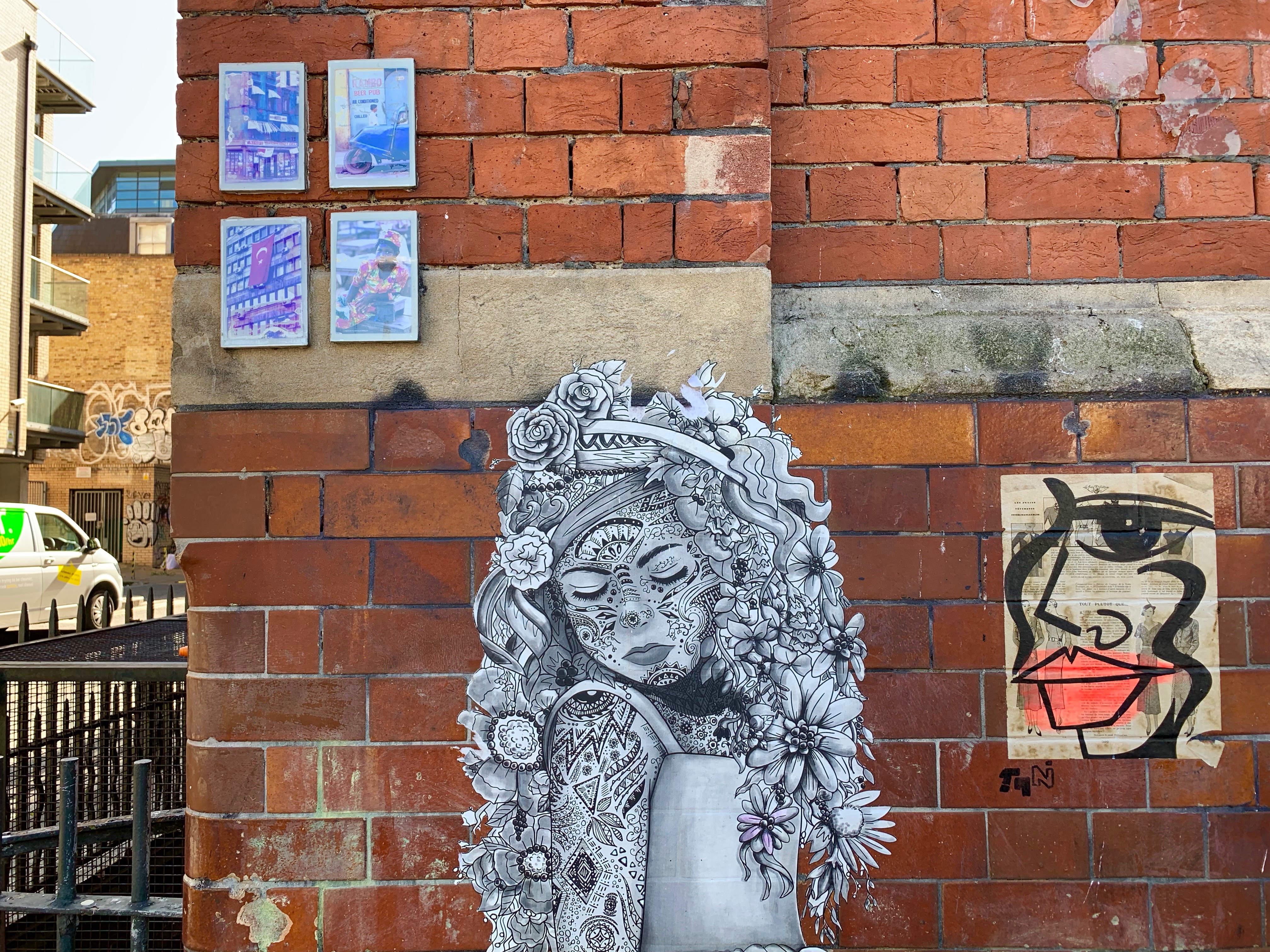
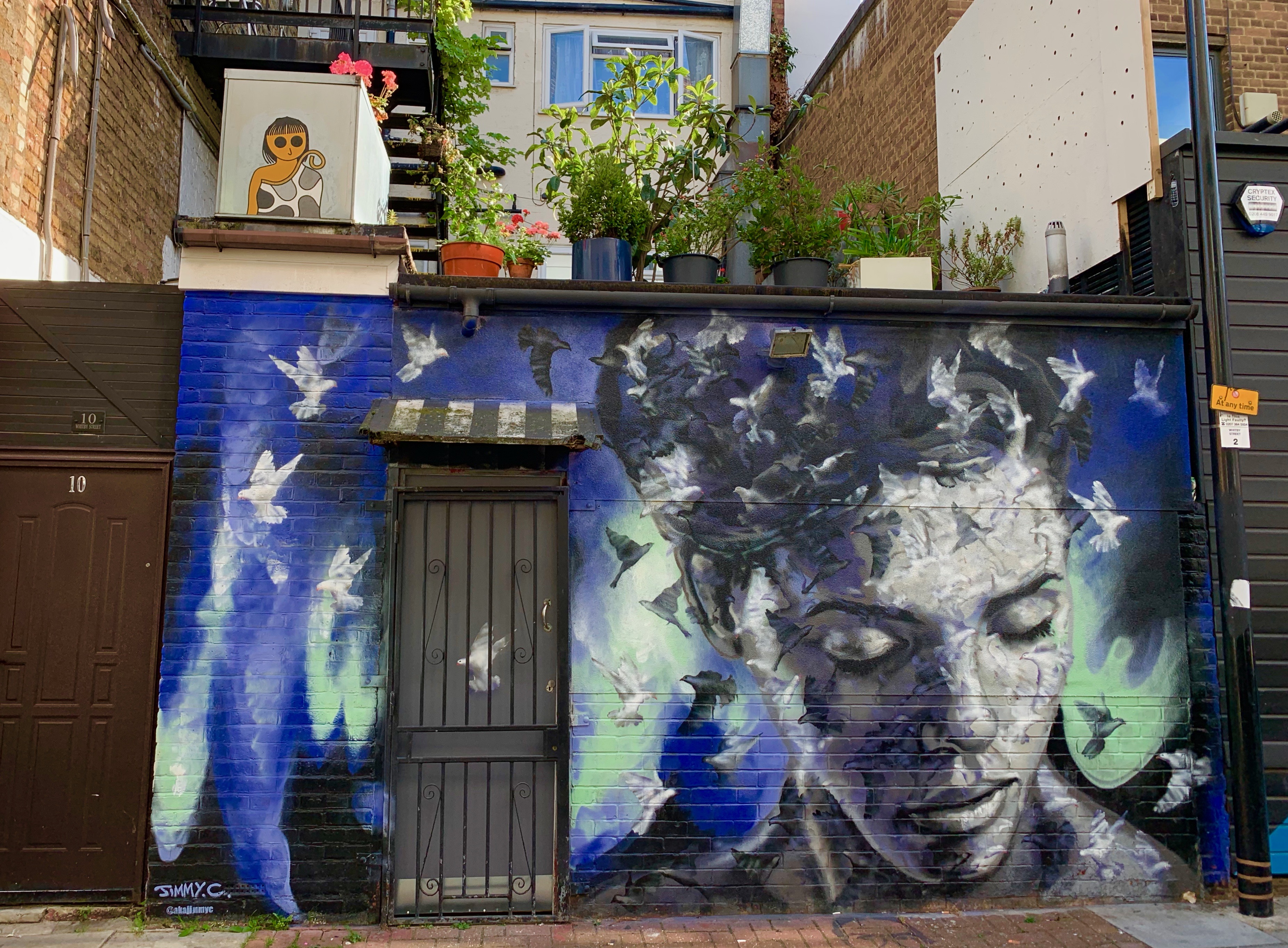
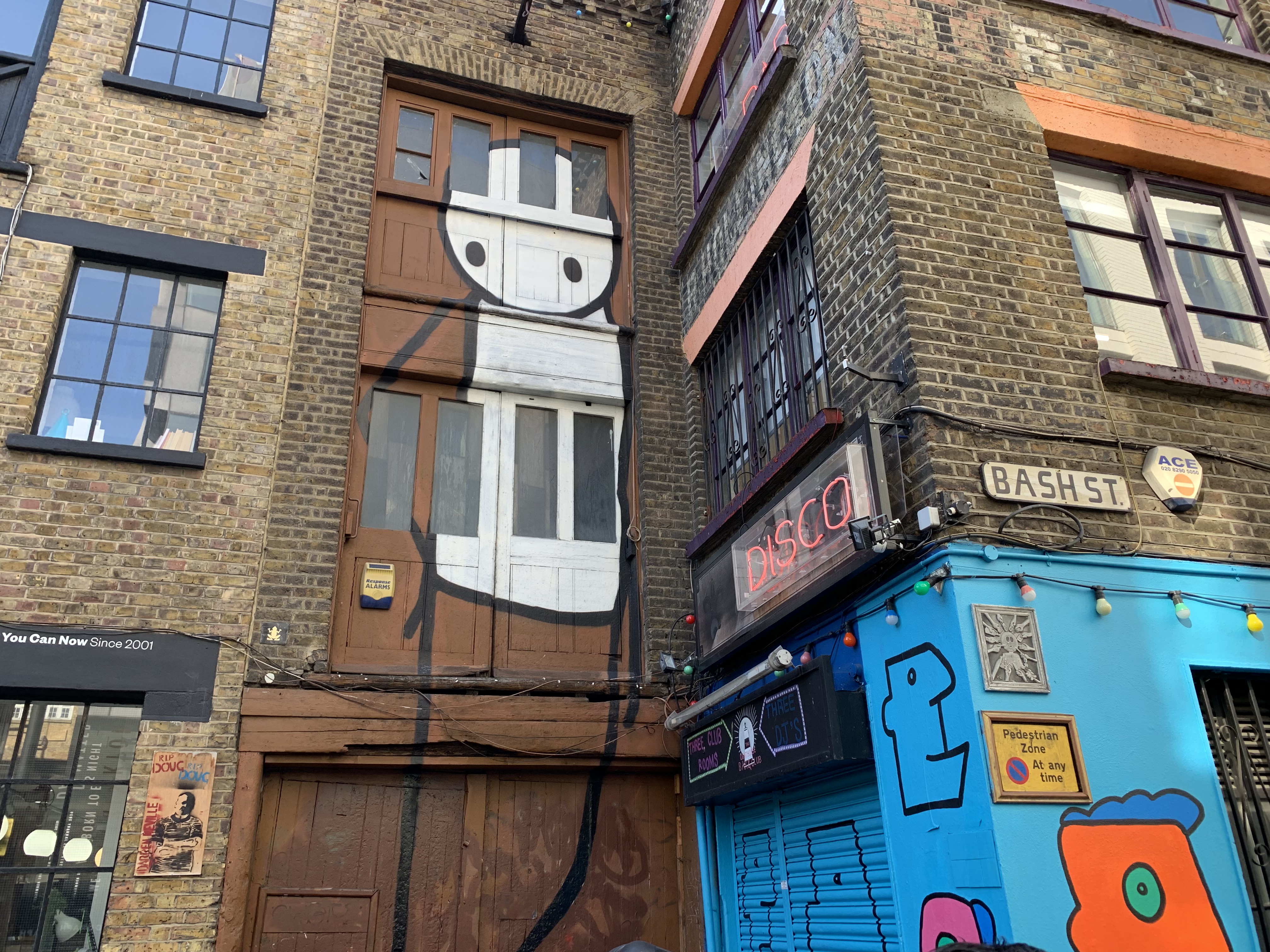
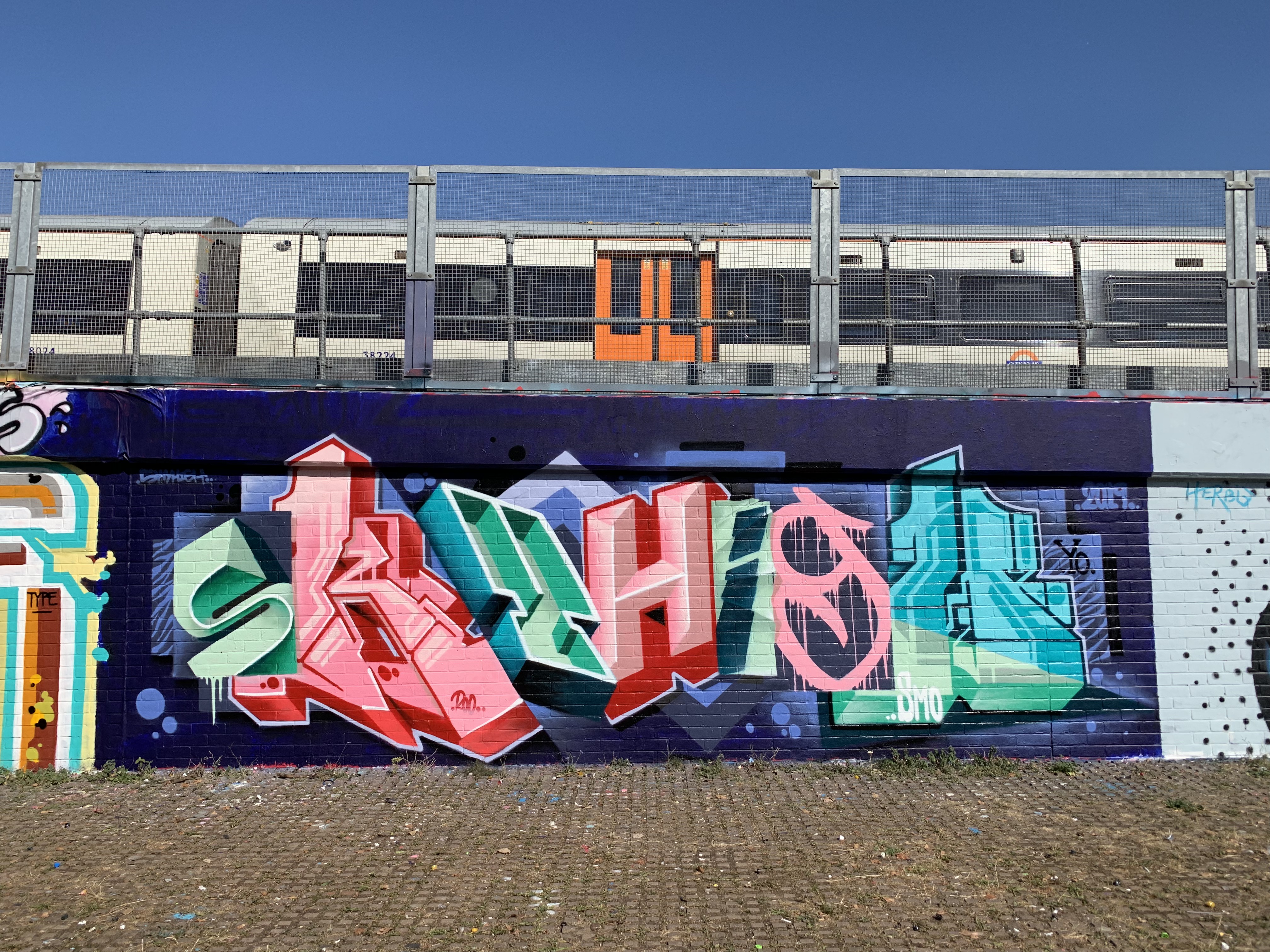
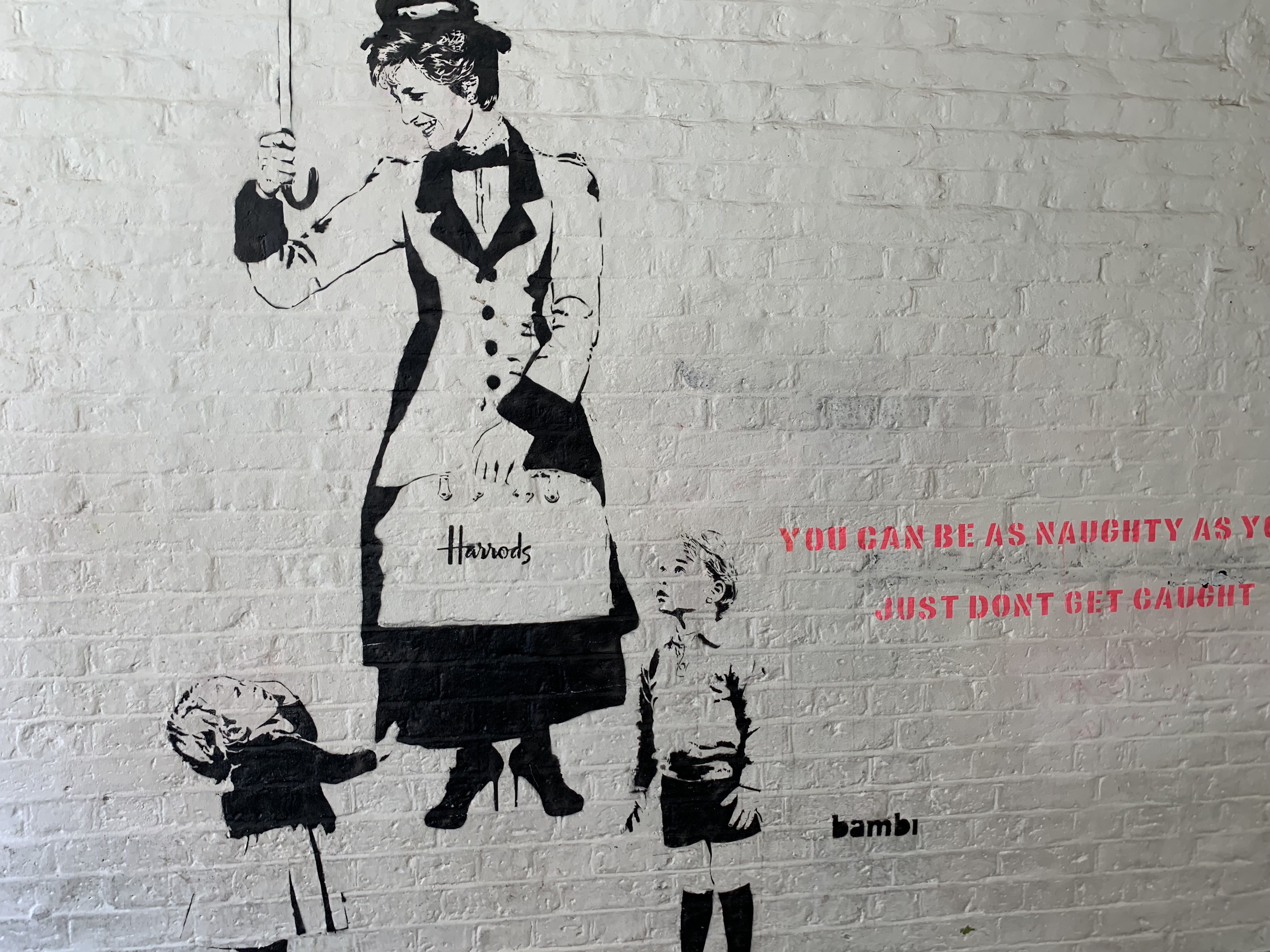
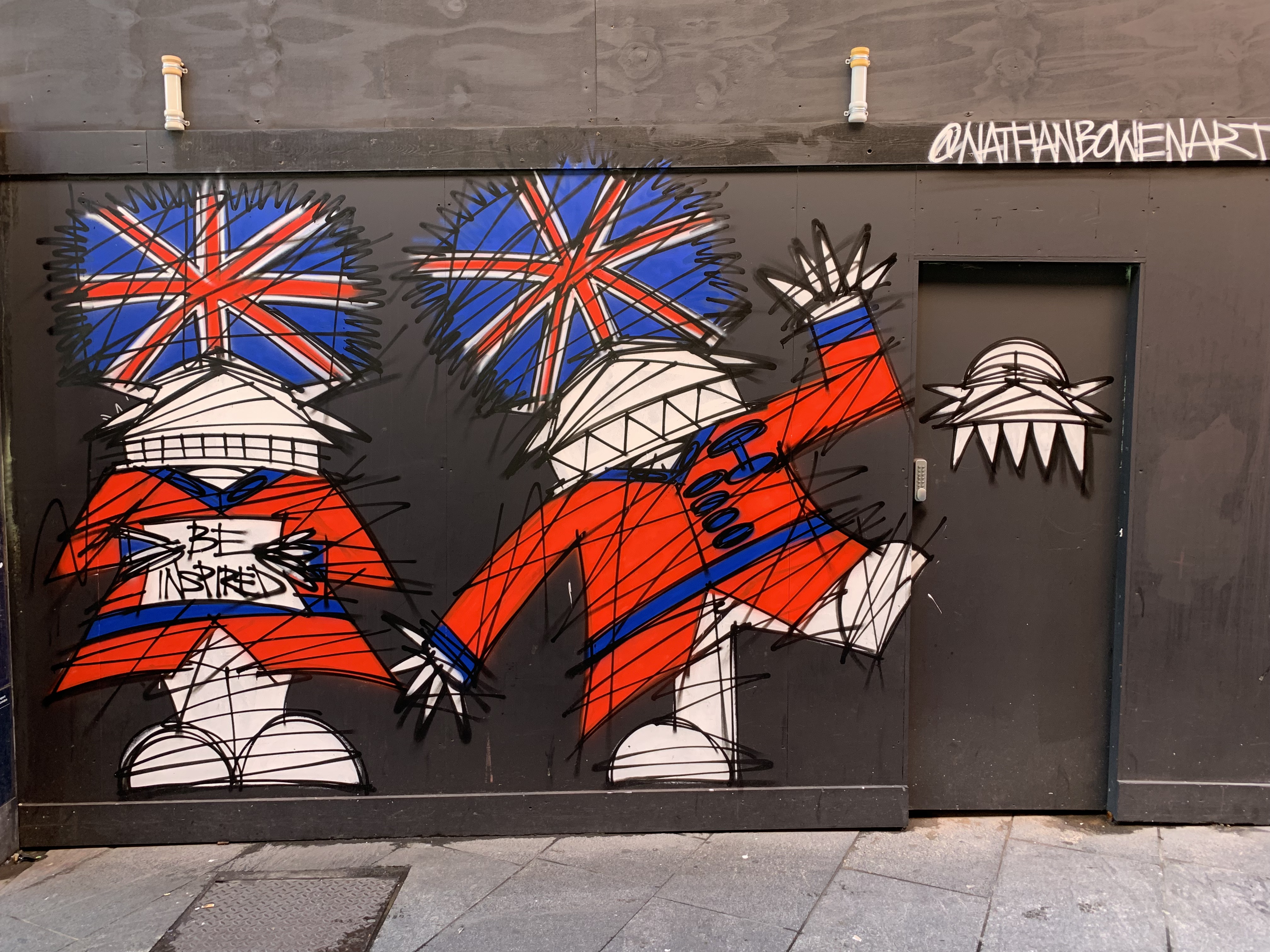
Here are some works that caught my eye during both tours!

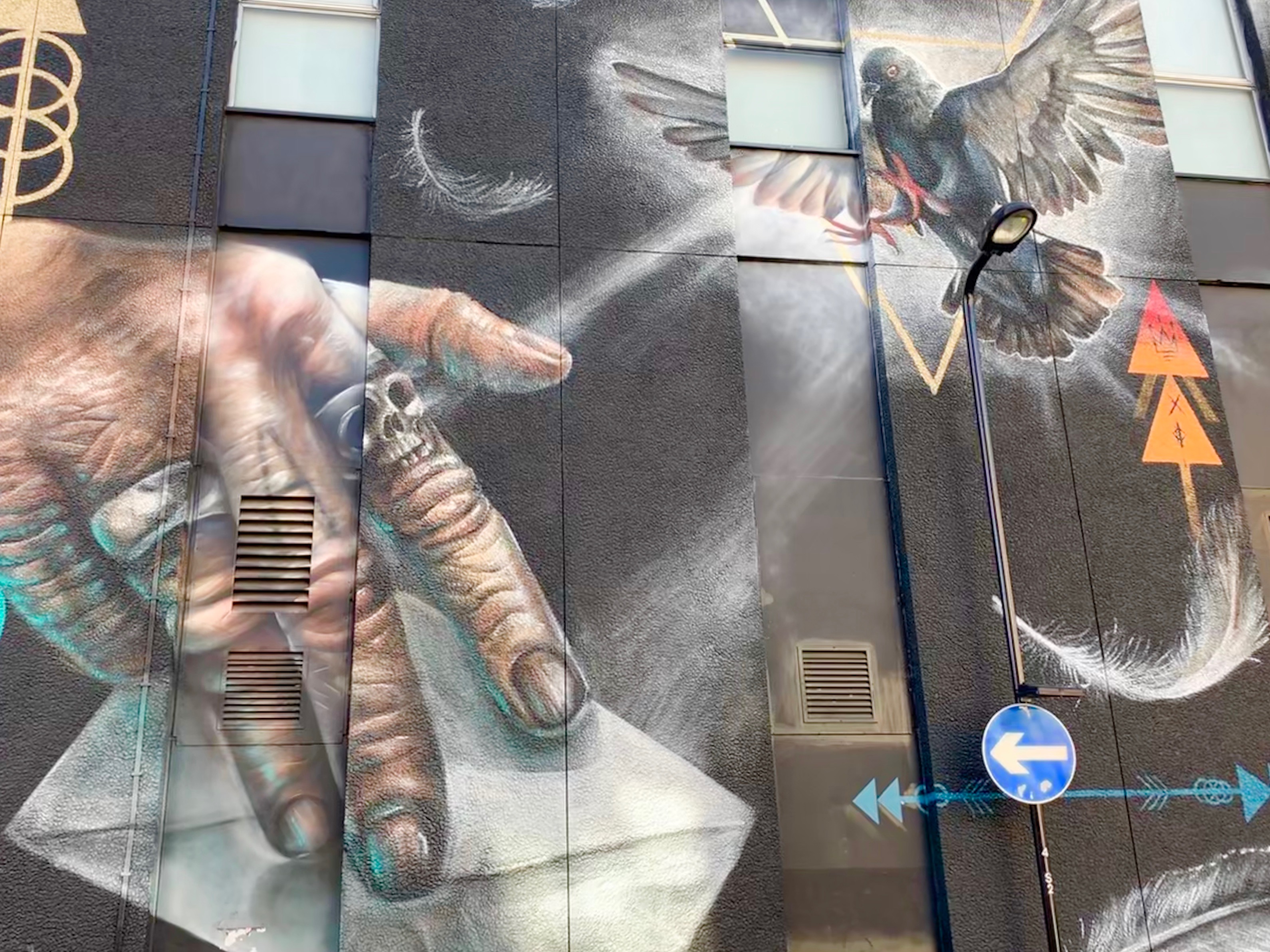

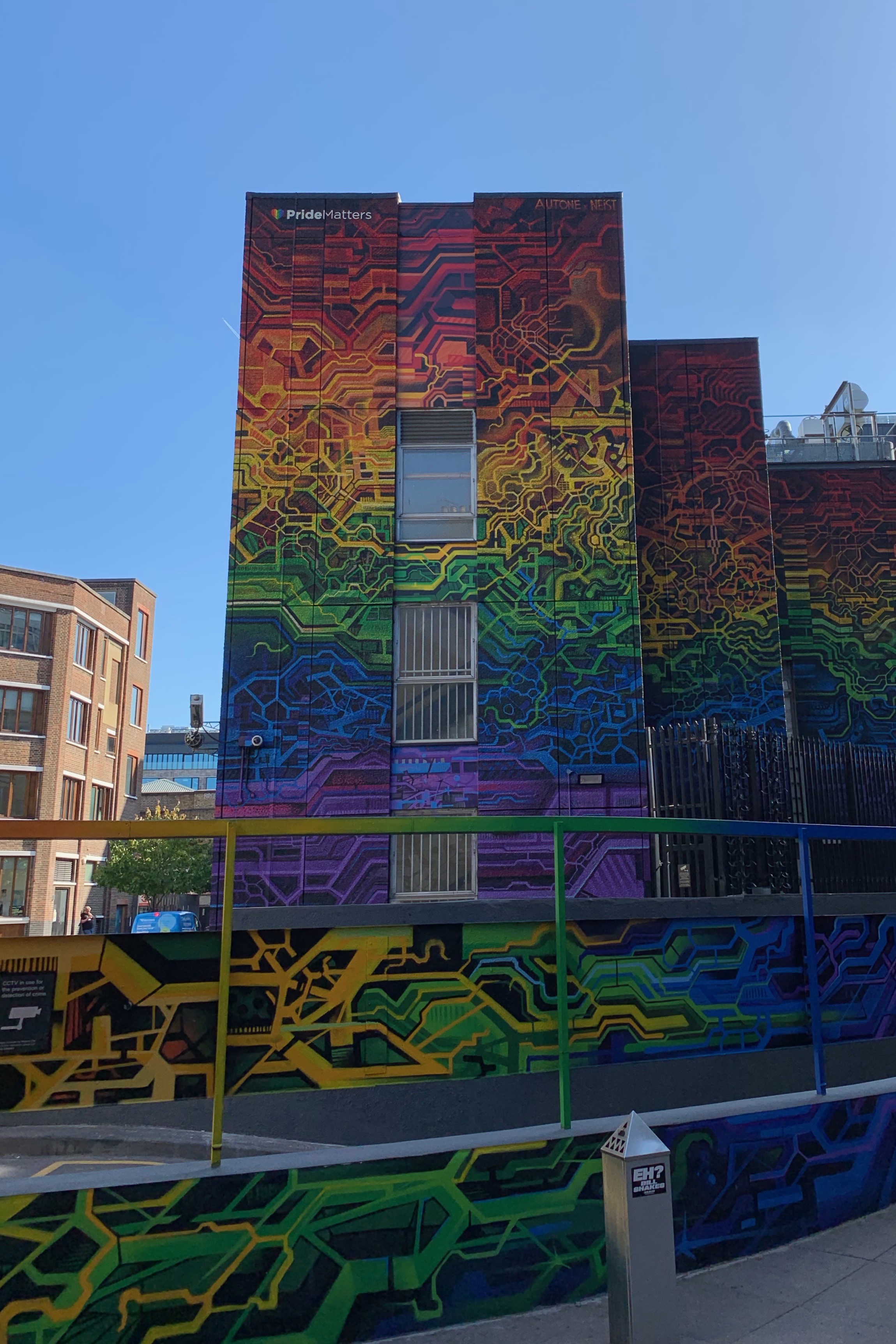
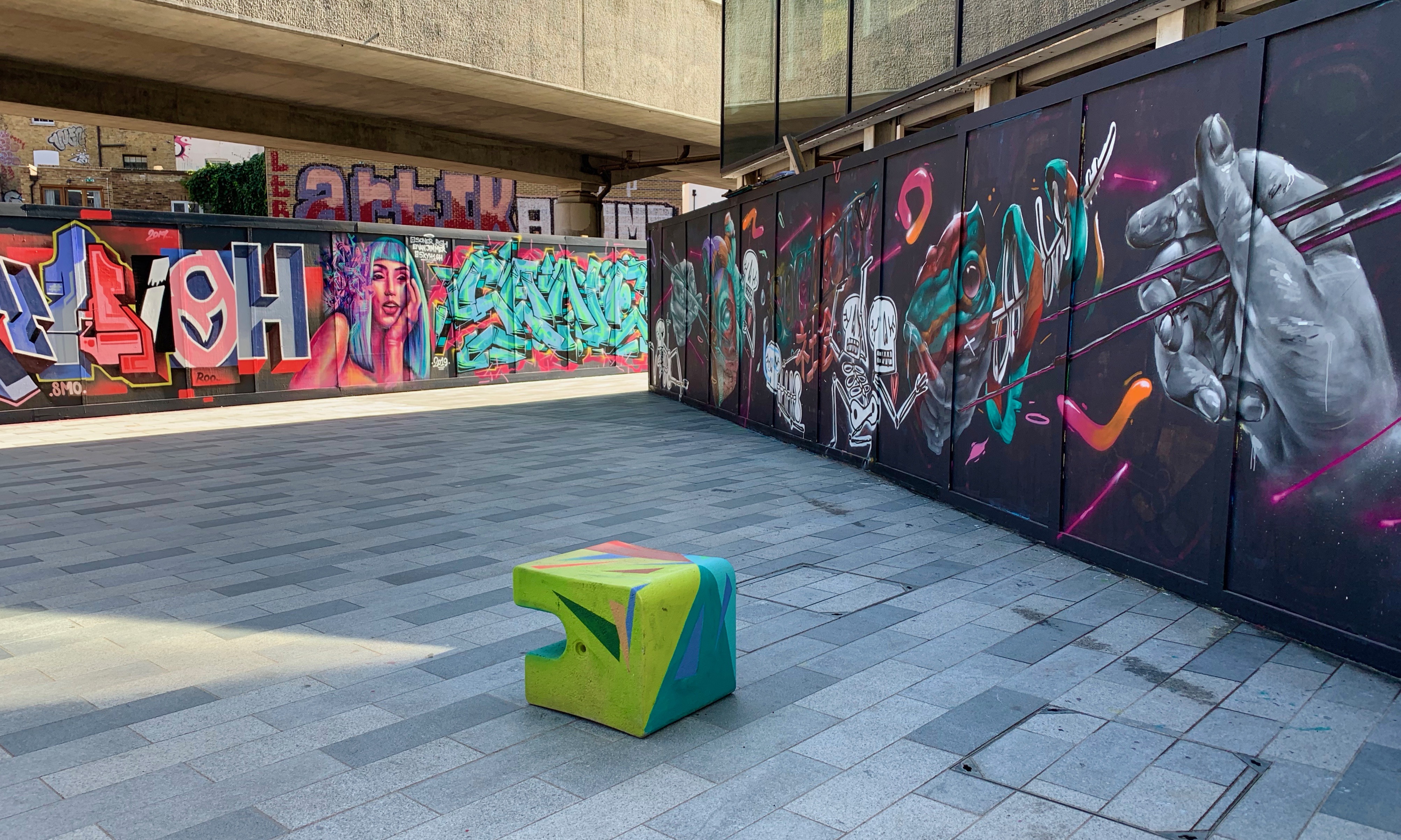
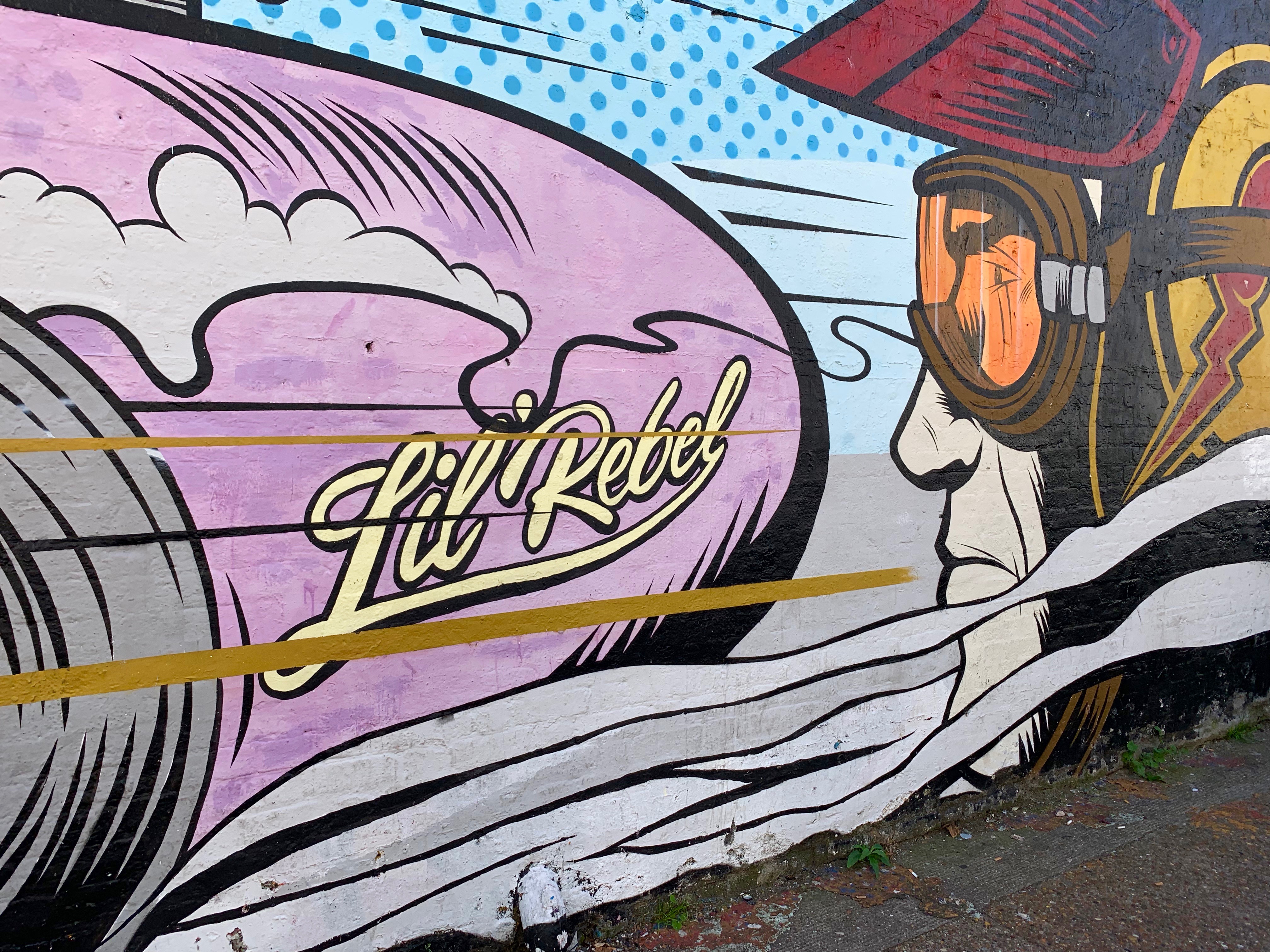


Reference
Andron, A., (2018) Selling streetness as experience: The role of street art tours in branding the creative city. The Sociological Review https://doi-org.ezproxy.uws.edu.au/10.1177/0038026118771293
 Alix Beattie: Street Art Researcher