
Description of the nature of your presentation
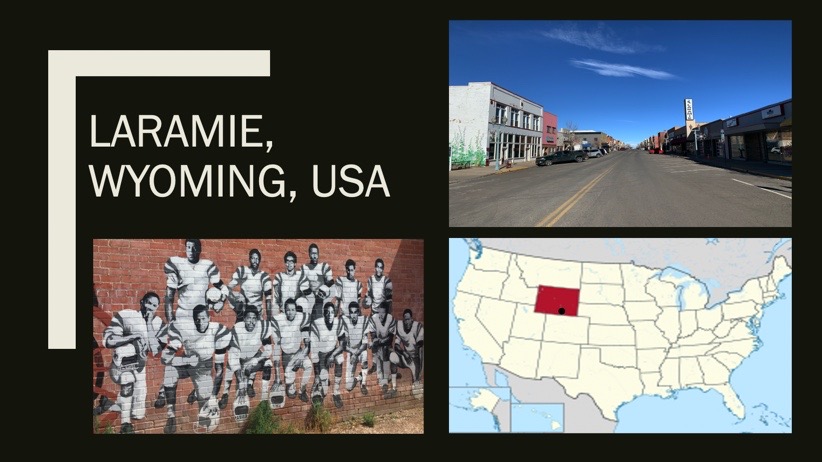
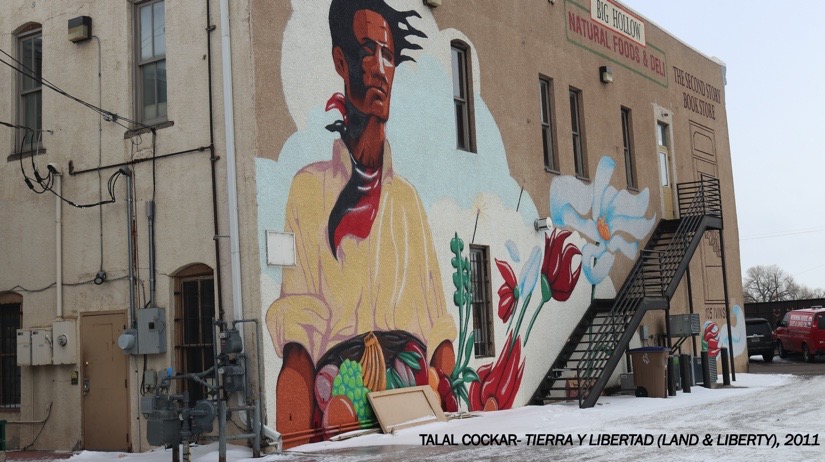
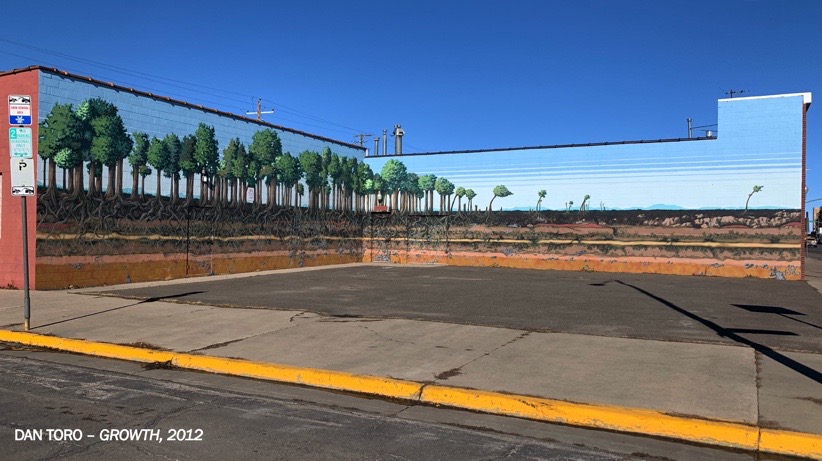
The presentation is part of my broader Doctor of Creative Arts project that is on contemporary Australian street artists and how street art creates a disruption in our everyday experiences of the urban environment. This case study presented was based on my research was conducted in Laramie, a small town in Wyoming, USA.
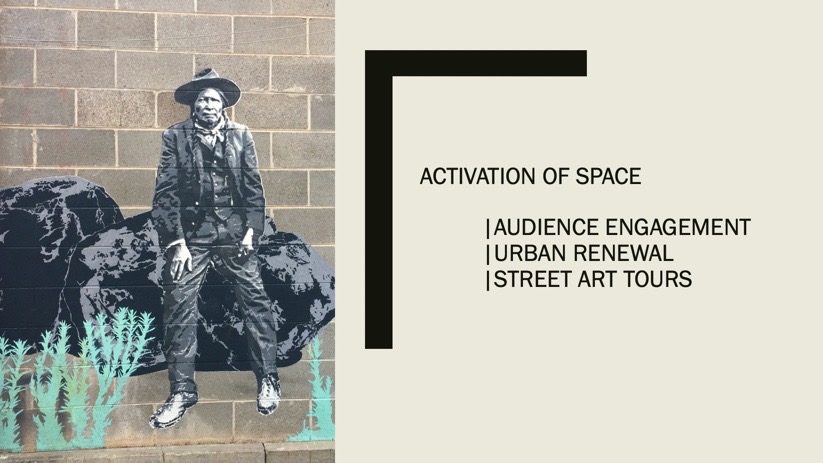
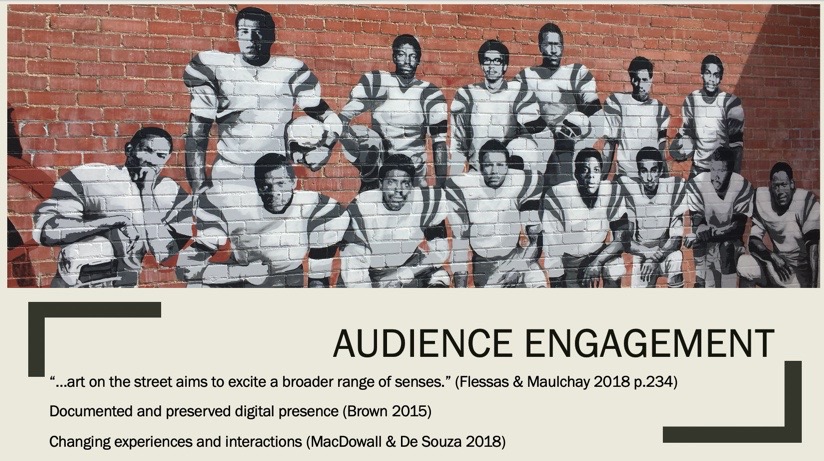
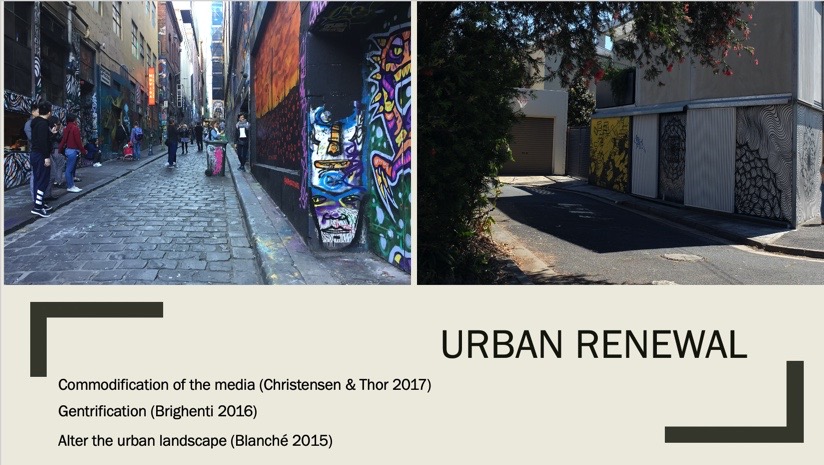
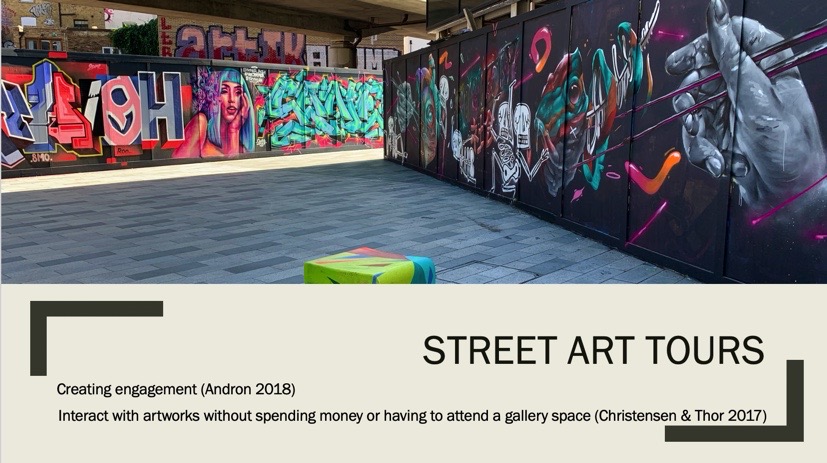
In the paper that this presentation draws from, I argued that street art can be used to create an ‘activation of space.’ This can happen through the art, the engagement with the audience and the way that events such as stress art tours build around the art works.
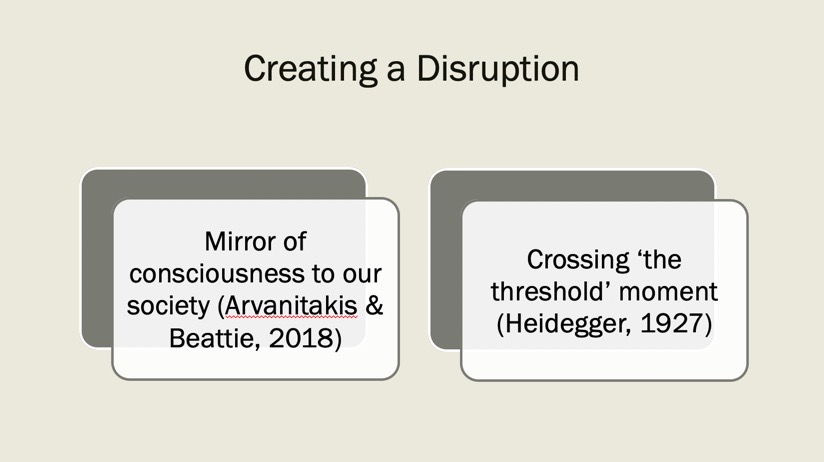
The paper was submitted to the Global Media Journal and accepted for publishing with changes. The changes requested focused on further developing the theoretical framework around this concept of disruption. In arts and practiced based doctorates, theory engagement often follows the artistic component. As my artistic component has been delayed because of the global pandemic, this forced me to develop theoretical work before my field work.
As such, while I found this challenging, the case study of Laramie allowed me to further my understanding of street art theory and further develop my theoretical background for my PhD.
This article now re-submitted, is not linked to a conference, so I presented the paper to my supervisory panel via zoom.
Reflection about the presentation
The presentation was chance to present the development of this new theoretical framework and was well received by my supervisory panel.
I do not enjoy public speaking – I even found presenting to my panel nerve racking. However, presenting via zoom was easier than giving the talk in person – not as many eyes on me in comparison to a normal presentation.
My supervisors provided feedback about my theoretical framework as we discussed how to structure the multiple threads of my thesis in my Doctor of Creative Arts exegesis. The panel asked multiple questions about the development of my theoretical work as well as the case study. providing constructive criticism of how to structure my argument.
As a presenter, it is always difficult to judge your own performance. Overall, however, it went well though I still got nervous in parts and stumbled over a few words.
I understand the importance of public speaking and how vital it is to have these skill sets for future job prospects. Specifically, to be able to translate your research in an accessible way.
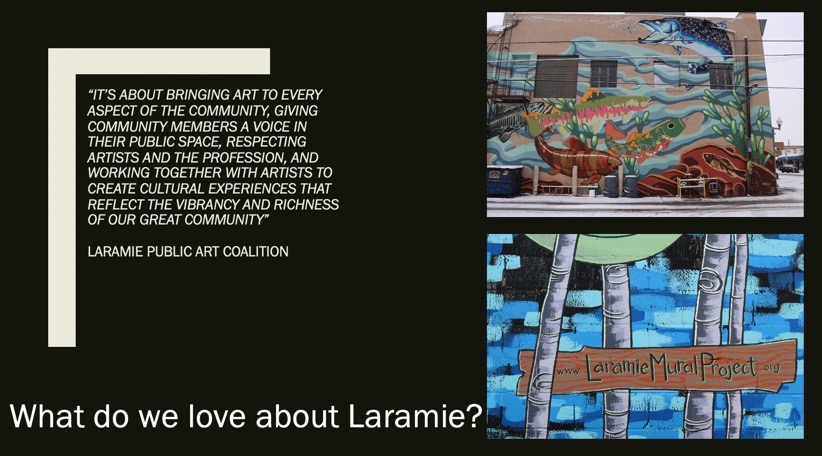
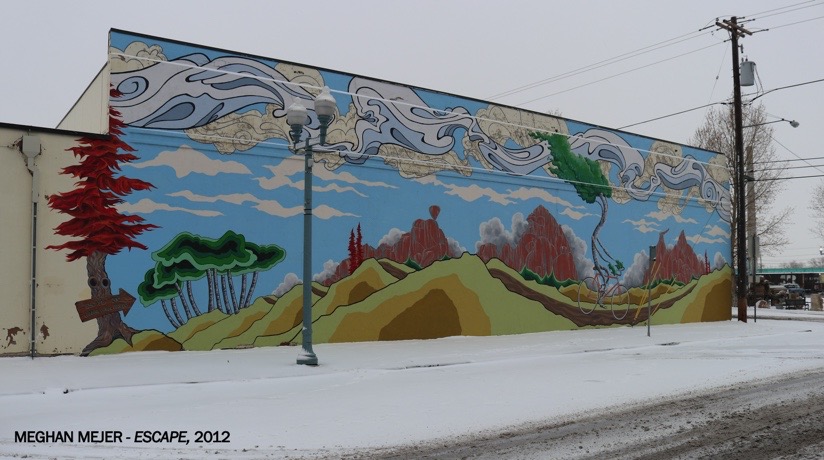
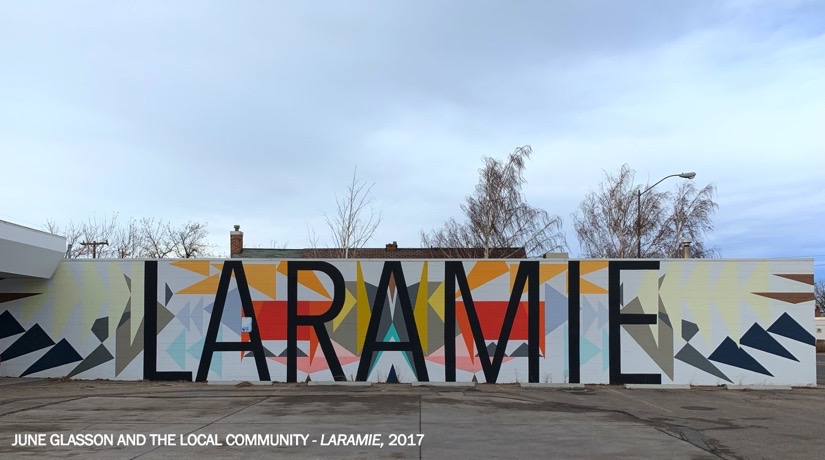
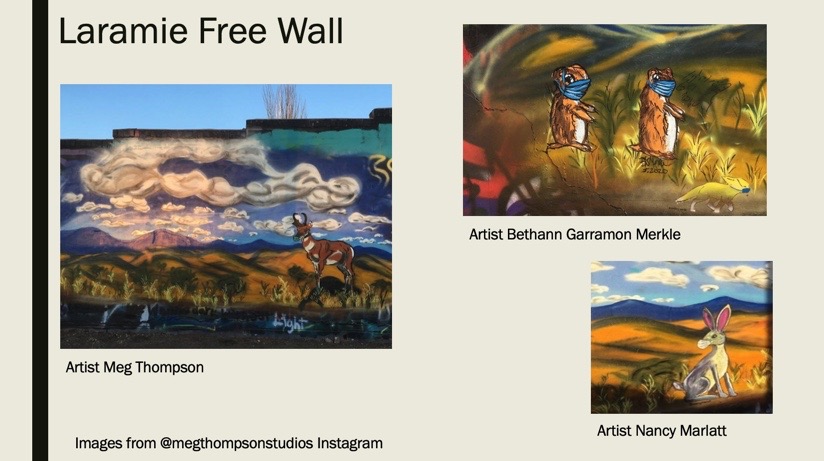
As a PhD student who has no interest in pursuing an academic career, I have not applied for conferences. As such, having to do a presentation for the GCREDI is very helpful as I learnt to translate the paper into a talk. This allowed me to have fun (especially with the imagery), to unpack the case study, and outline the theoretical framework.
I think the only regret of the presentation was that I did not record it. Honestly it did not cross my mind and personally I think it is a missed opportunity. It would have been great to review my own performance – even though watching yourself is cringy – I would have been able to learn from the experience by seeing myself talking. This could have been an excellent way to look at my presentation skills and improve through watching myself speak.
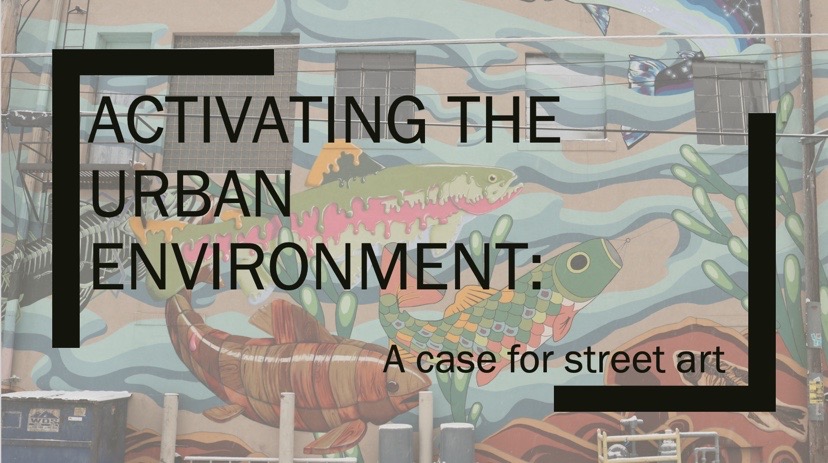
Activating the urban environment: A case for street art



 Alix Beattie: Street Art Researcher