
Canberra is Australia’s national capital and is situated in Australian Capital Territory (ACT). It is home to a number of Australia’s political and cultural institutions including Parliament House, the National Gallery of Australia and Australia’s best science museum, Questecon.
It is a planned city notable for how well maintained it is: clean, walkable and visually pleasing to visitors and locals. Whilst a quiet city when compared to other Australian cities, it comes alive during parliamentary sitting sessions.
The ACT State Government recently launched an urban public art project. It began by issuing grants to local street artists for murals and different projects that encompass urban art. These initiates aim to enhance the community through engagement of both the artist and the people that use Canberra’s public spaces.
This program was also used to generate work for artists who have suffered during these uncertain and depressed economic times brought on by the pandemic.
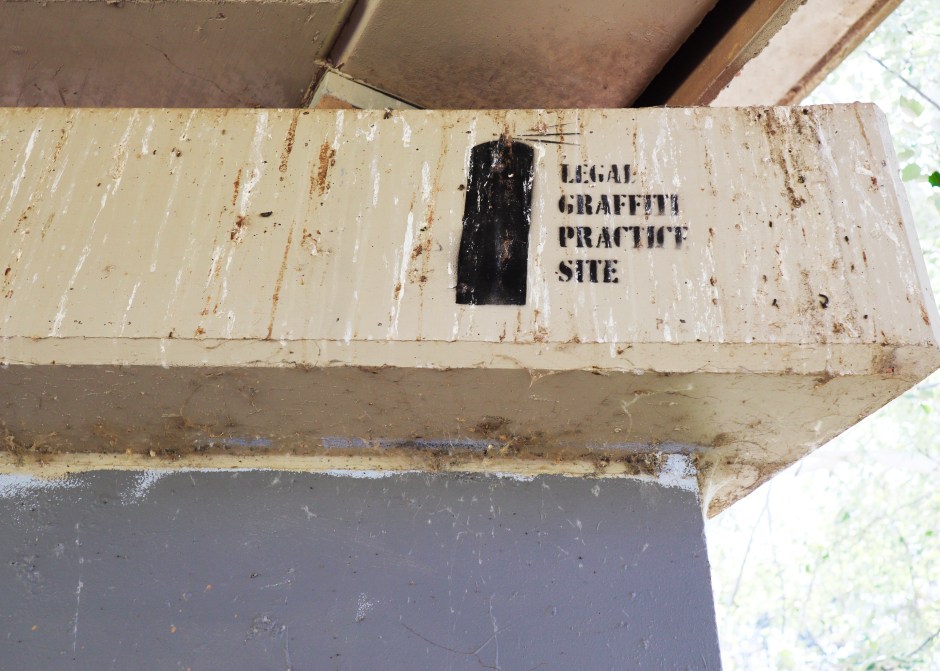
Another dimension of Canberra is their liberal policy on graffiti. A city that contains beautiful parklands, bike paths and multiple museums and galleries also has a number of legal graffiti practice sites.
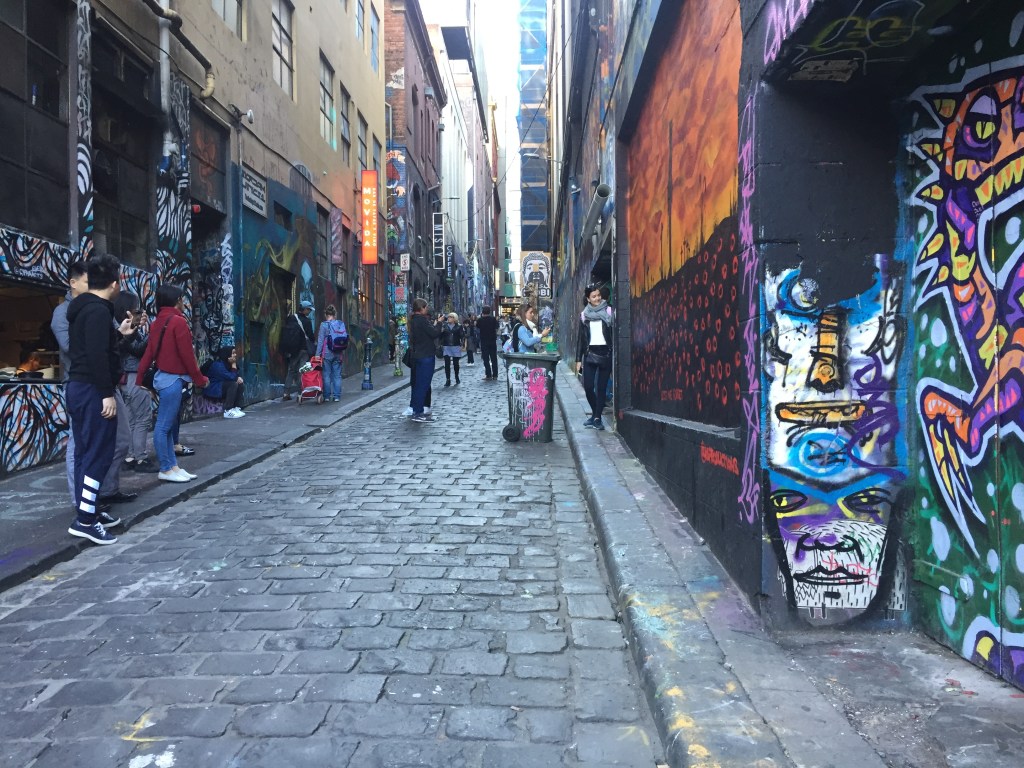
This reflects the practice and policy of the Victorian Government who utilise Melbourne’s laneways throughout the city. By providing these areas – it not only creates a space for artists to reshape the urban environment, it also encourages tourism. People flock to Melbourne’s famous laneways, including Hosier lane, to experience the ever changing urban canvas.
The ACT government’s public policy on Graffiti encompasses four aspects: legal graffiti practice sites; murals; removal of illegal graffiti; and the abovementioned grants scheme.
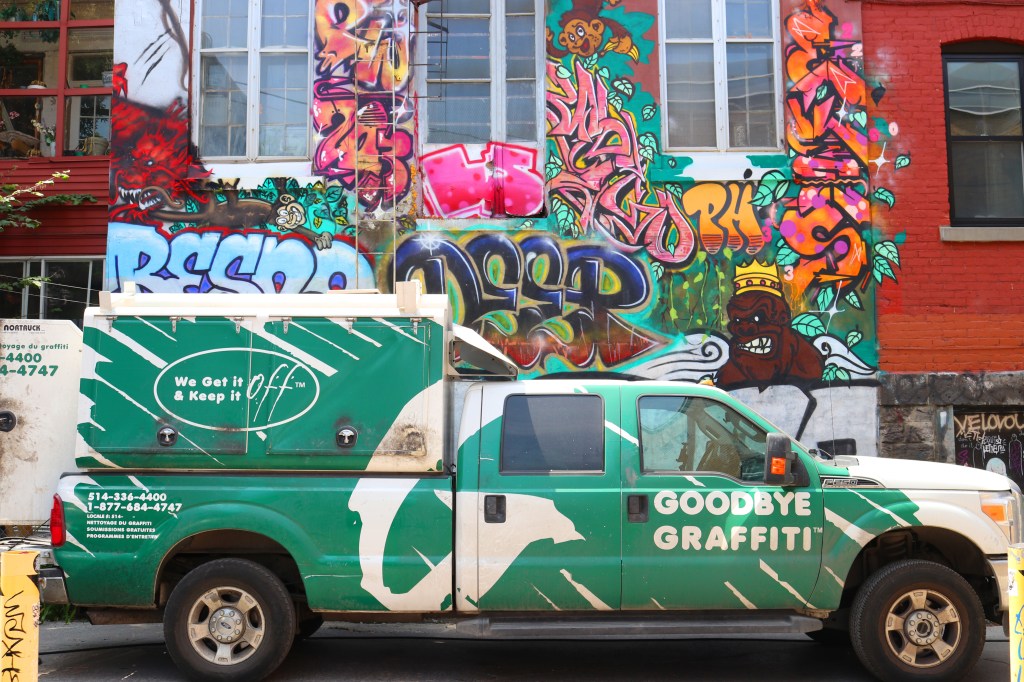
Historically, graffiti has been linked to every public policy document. Such a policy change frees the artistic community to be creative with fear of legal repercussions, though the ‘removal’ dimension of the policy aims to limit the expansion of the street art areas. In cities such as Montreal (which I visited in July 2019), there is an area called Le Plateau-Mont-Royal where the streets explode with street art and graffiti but is always held in check by graffiti removal teams.
The ACT initiative is guided by the following philosophy: “Art enhances our quality of life.”
By providing this specific engagement with graffiti writers, the government is aiming to use the artistic culture to engage with and enhance the experiences of the community.
The designated areas are well documented on the ACT government website where maps are provided and information on each site is easily accessible. On the website, rules are also outlined.
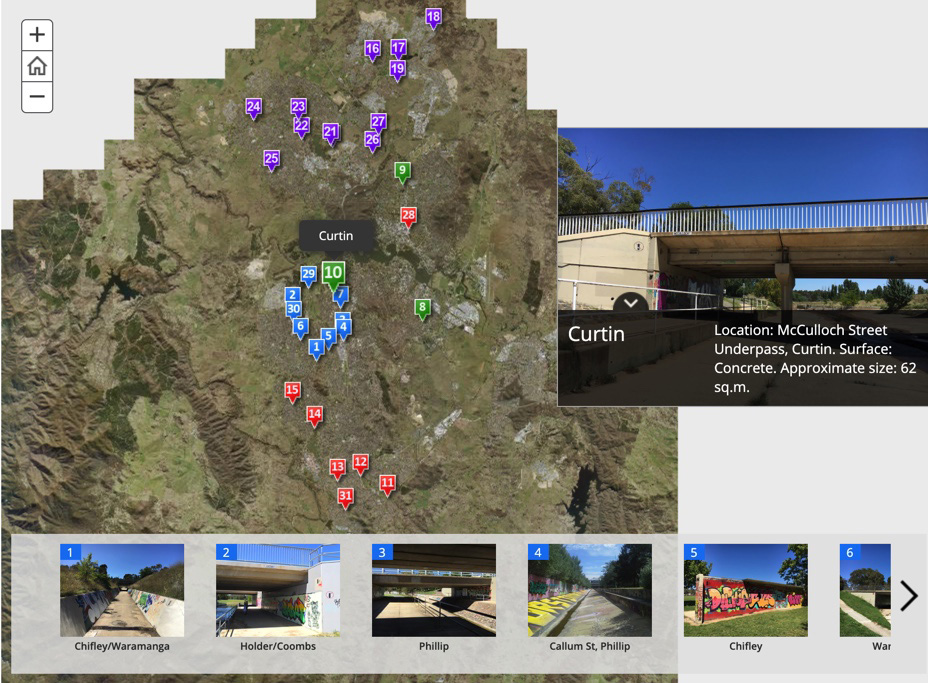
The free walls are mainly located in the outskirt suburbs of the CBD though there is one in Bradden which is in the heart of the city. There is no explanation why the government prefers the outer suburbs: maybe it is pragmatic as these may be the only spaces available. Alternatively, there could still be a stigma about graffiti writers and the links to vandalism.
I checked out a few of the sites in Canberra recently, Bradden (28), Belconnen (20 & 21) and Kaleen (27).
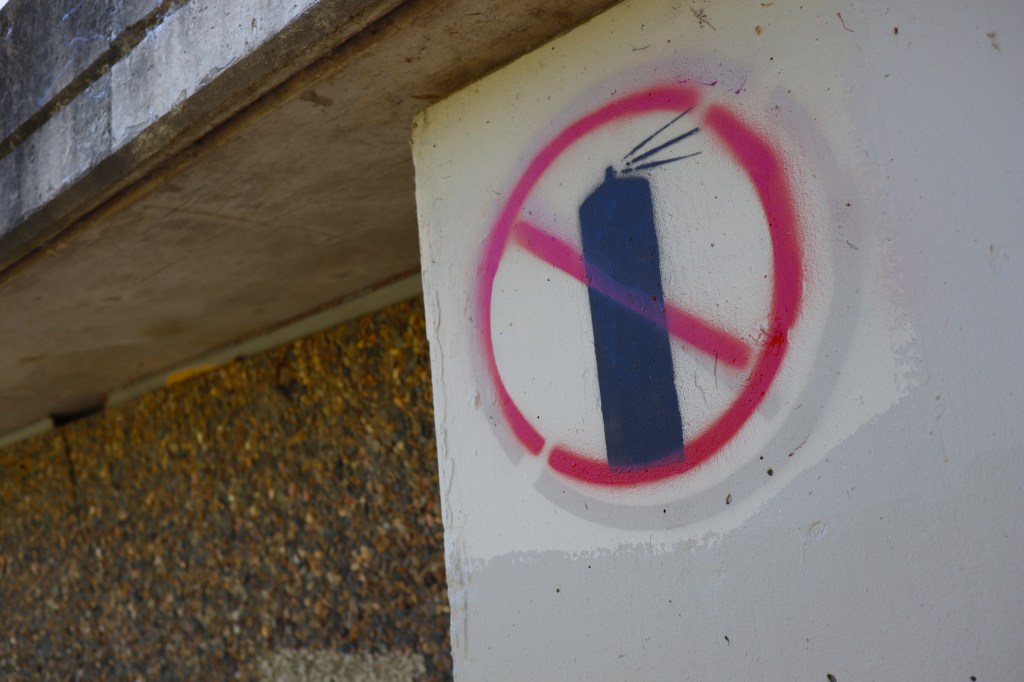
Image by the author
These spots I visited had large spaces for artists to create works as well as containing guidelines as to how and where the artworks should be placed. The walls contained images, tags, social commentary and typography. Layer upon layer of paint was evident on the walls.
Such guidelines did not stop some artists mocking the rules however. The artistic freedom is to the hand of the artist. In my opinion a nice balance – a cheeky way of artists responding to the space.
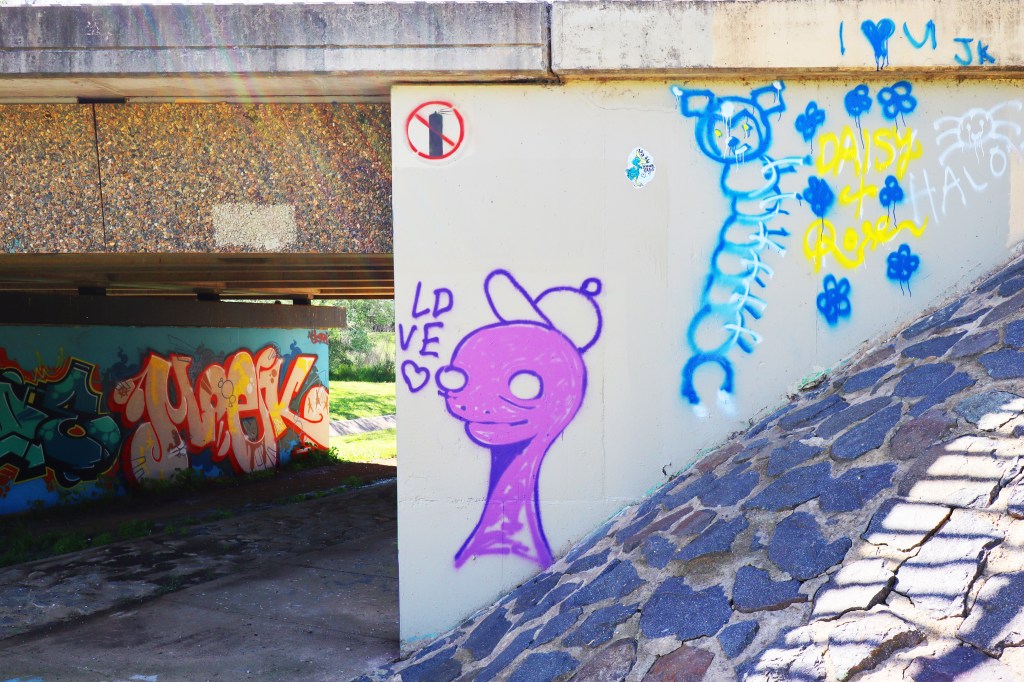
Does such an approach minimise illegal graffiti? I cannot answer this question.
In places such as Canberra, however, such a public policy approach provides an opportunity for artists to conduct their work and reshape the urban environment. It creates a safe space for artists who do not need to risk injury or legal backlash. It is creating a duty of care.
Here are some of the highlights…
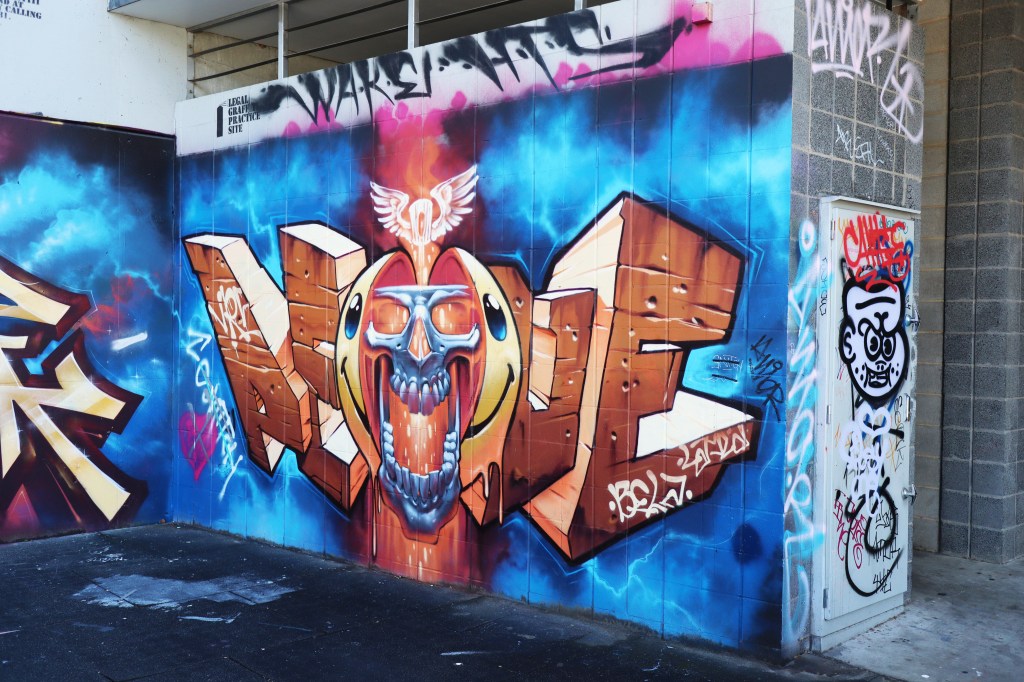
Bradden ACT 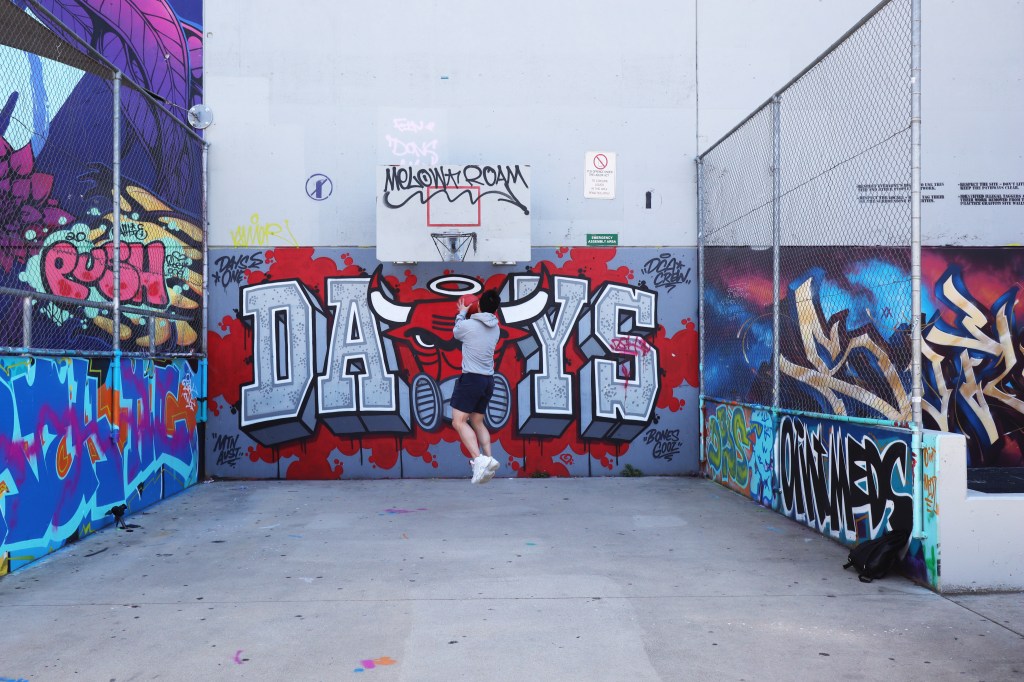
Bradden ACT 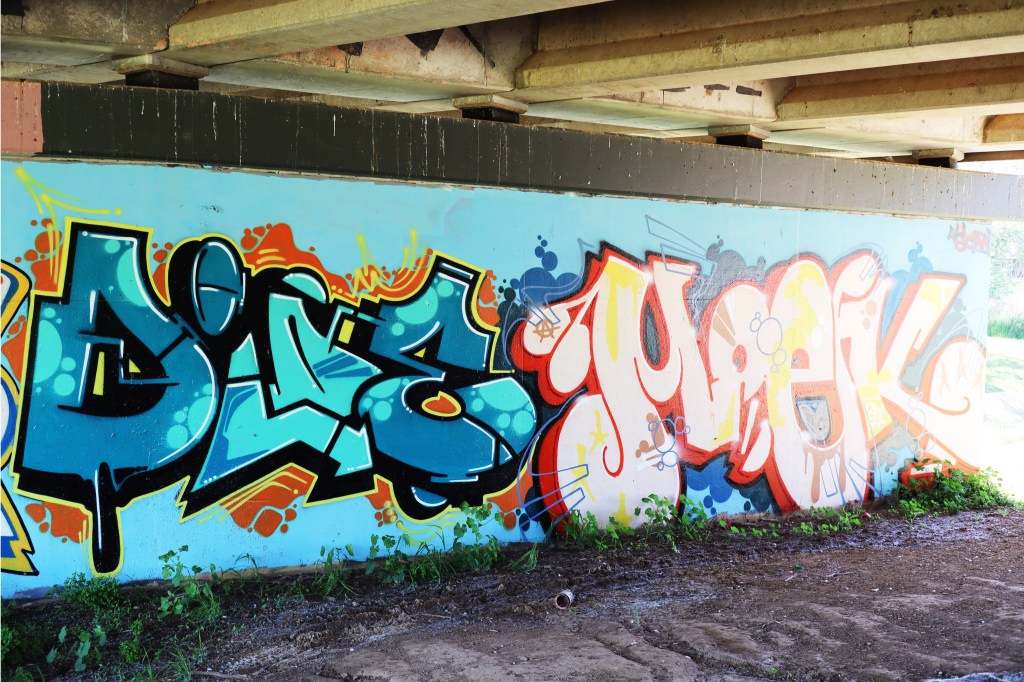
Kaleen ACT 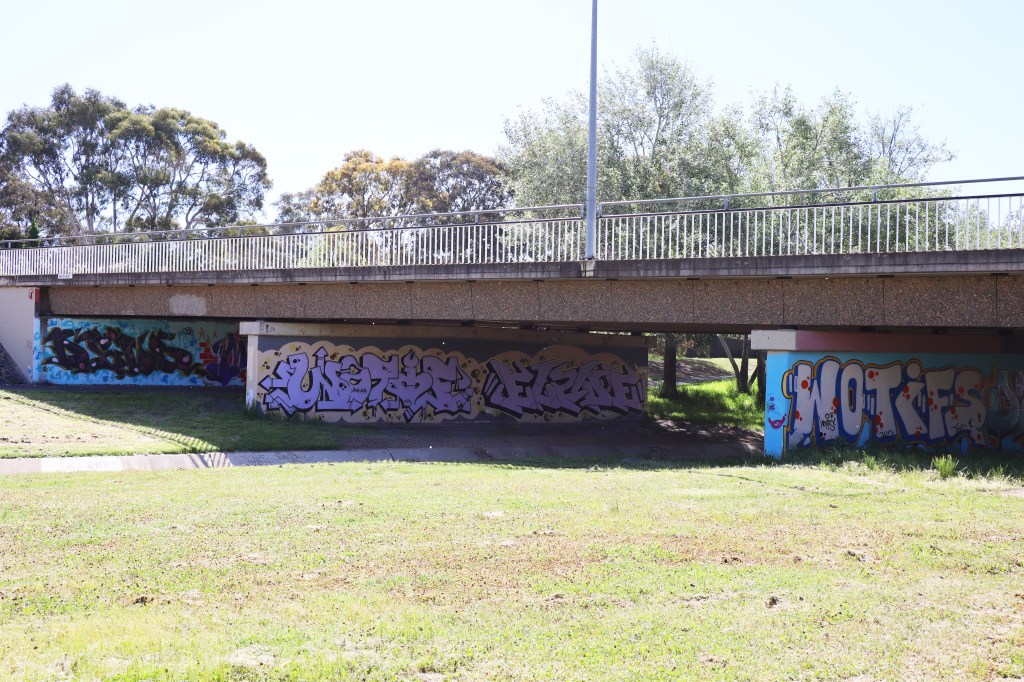
Kaleen ACT 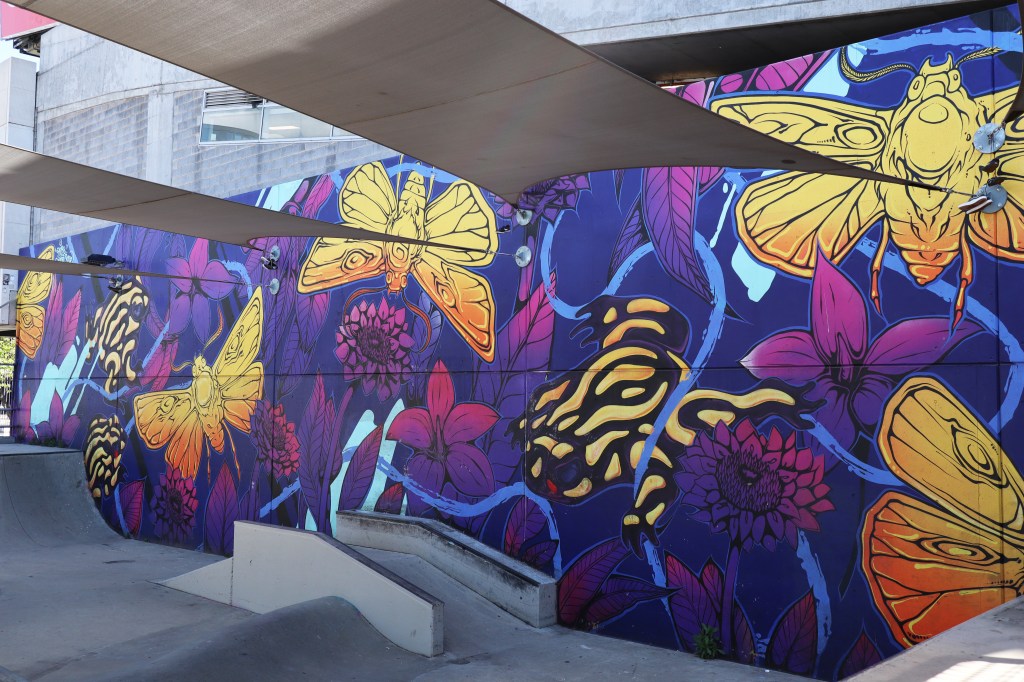
Bradden ACT 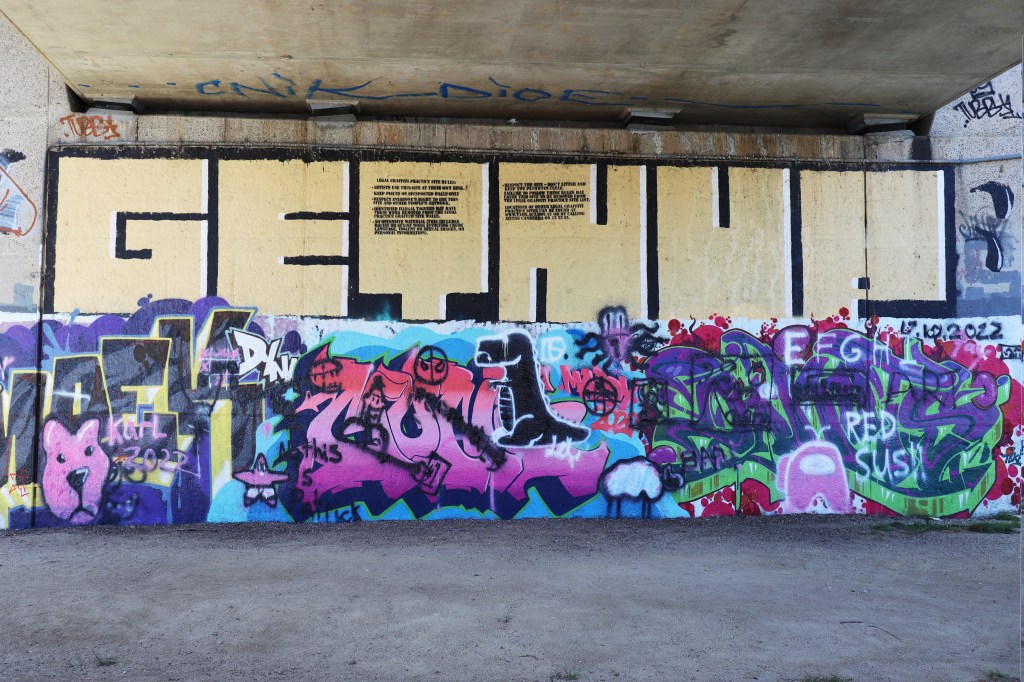
Belconnen ACT 
Belconnen ACT 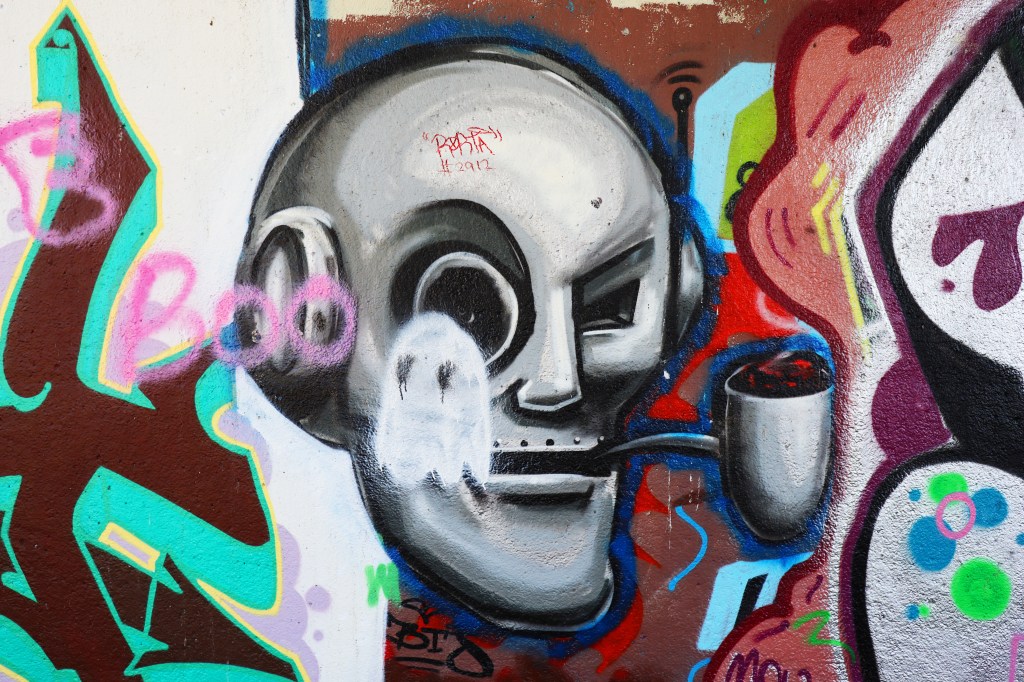
Belconnen ACT 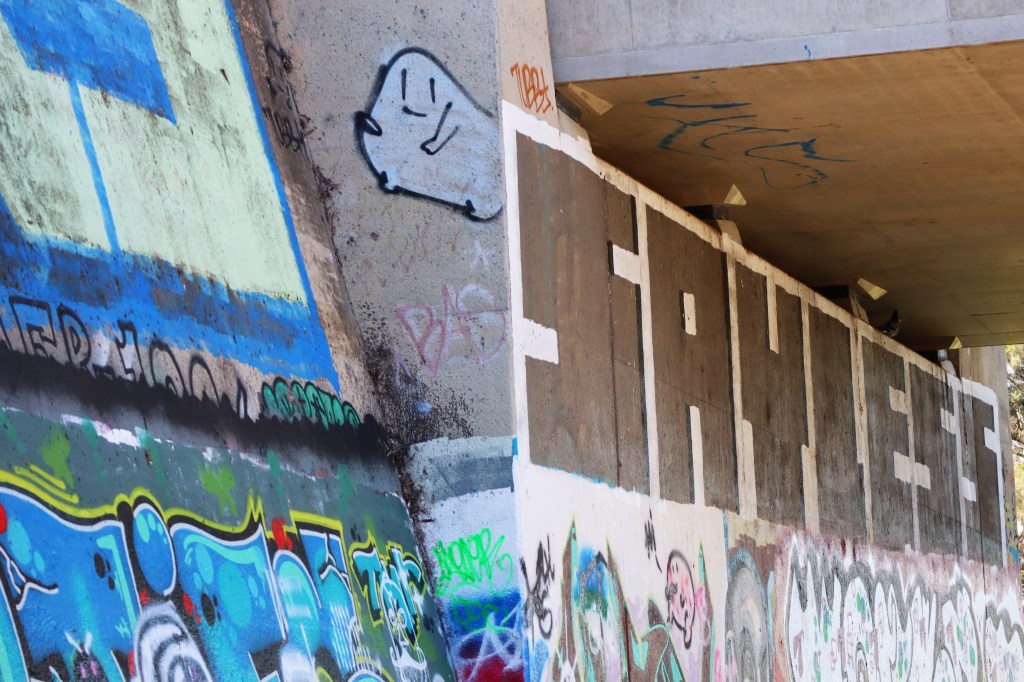
Belconnen ACT
 Alix Beattie: Street Art Researcher