

The annual Archibald Prize is the most prestigious portrait competition in Australia and hosted by Sydney’s Art Gallery of NSW (AGNSW). The exhibition also includes the Sulman Prize (genre or subject) and the Wynn Prize (landscape).
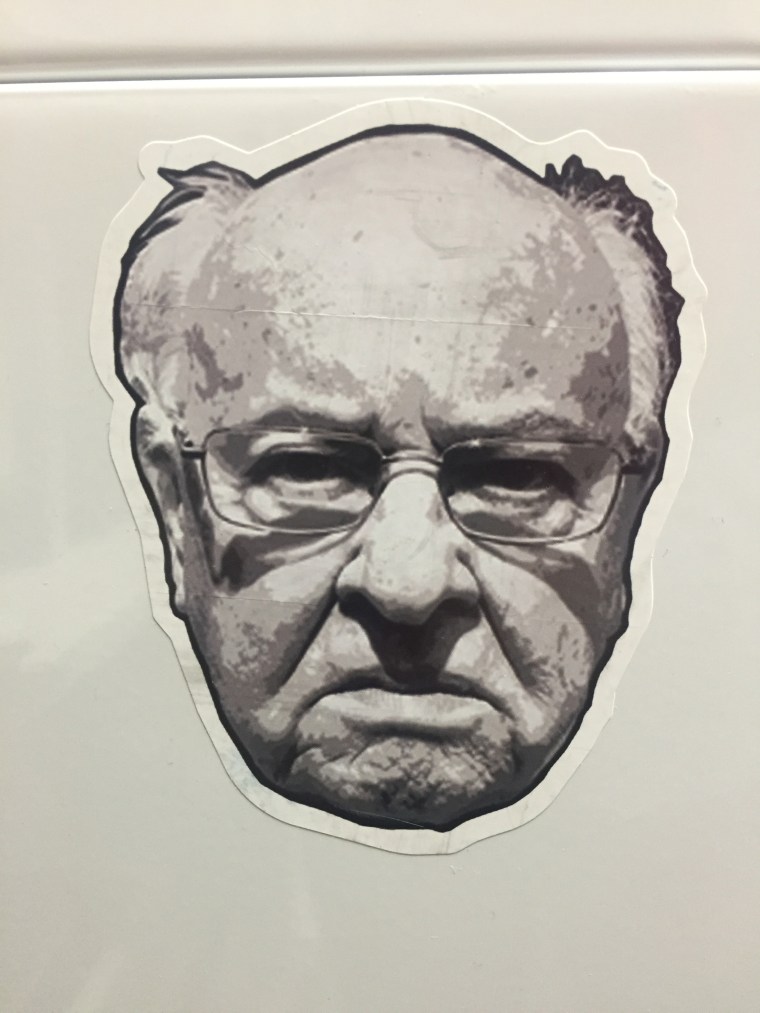
The Archibald Prize began in 1921 and has captured a following of artists and art enthusiast for decades. The portrait, as stated on the AGNSW website, is required to be ‘…preferentially of some man or woman distinguished in art, letters, science or politics, painted by any artist resident in Australasia’.
The number of entries has increasing annually with 1068 entries in 2020 submitted and only 55 finalists selected.
In 2012, Luke Cornish (aka E.L.K.) became the first street artist to be a finalist of the Archibald Prize with his imagery of Melbourne personality and religious leader ‘Father Bob’ (Father Robert John Maguire).
This was a breakthrough for the local street artist community: an artist who normally uses the urban landscape as a canvas, graced the walls of the AGNSW.
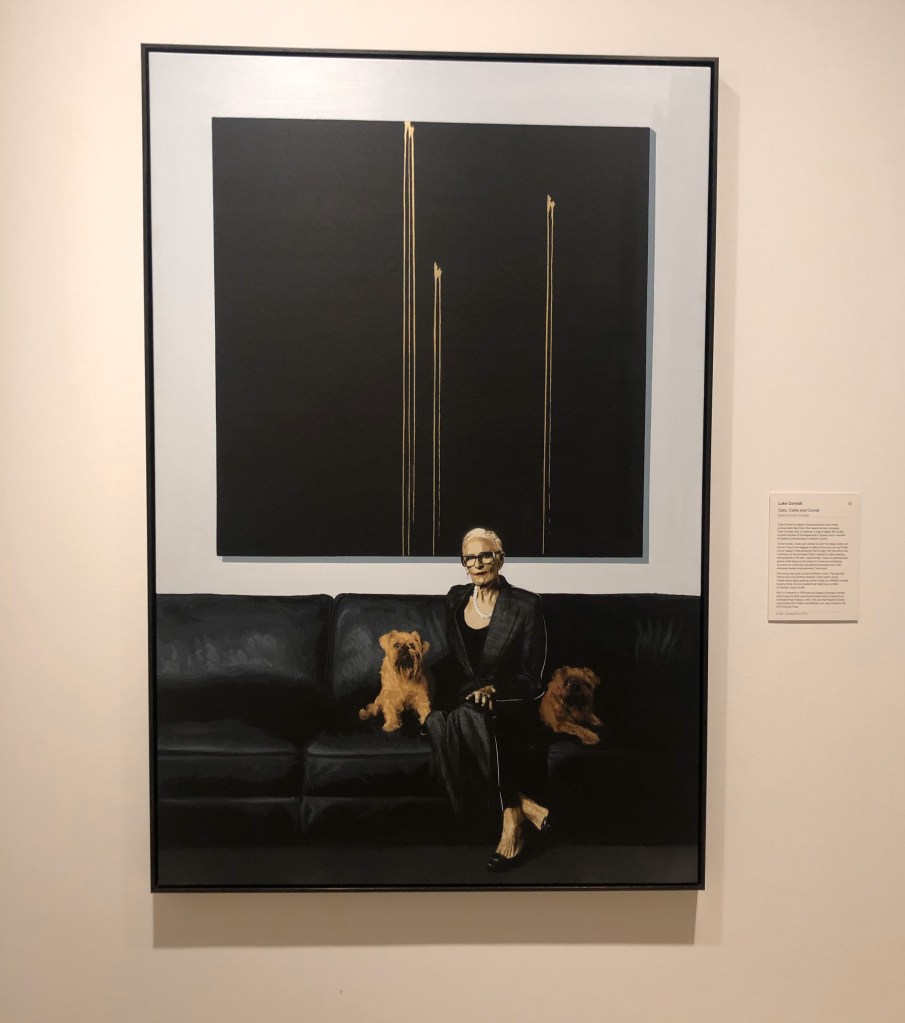
Luke Cornish again was again an Archibald finalist in 2019 with his portrait of Sue Cato and her dogs Cato, Callie and Comet.
This year, another prolific Australian street artist was included in the AGNSW’s premier prize, Scott Marsh. This, titled Salute of gentle frustration, was of Aboriginal artist and activist, Adam Briggs. Scott Marsh described Briggs in his artist statement as follows:
“Briggs is something of a modern-day Renaissance man – rapper, record label owner, comedy writer, actor, author and staunch ambassador for Aboriginal rights.”
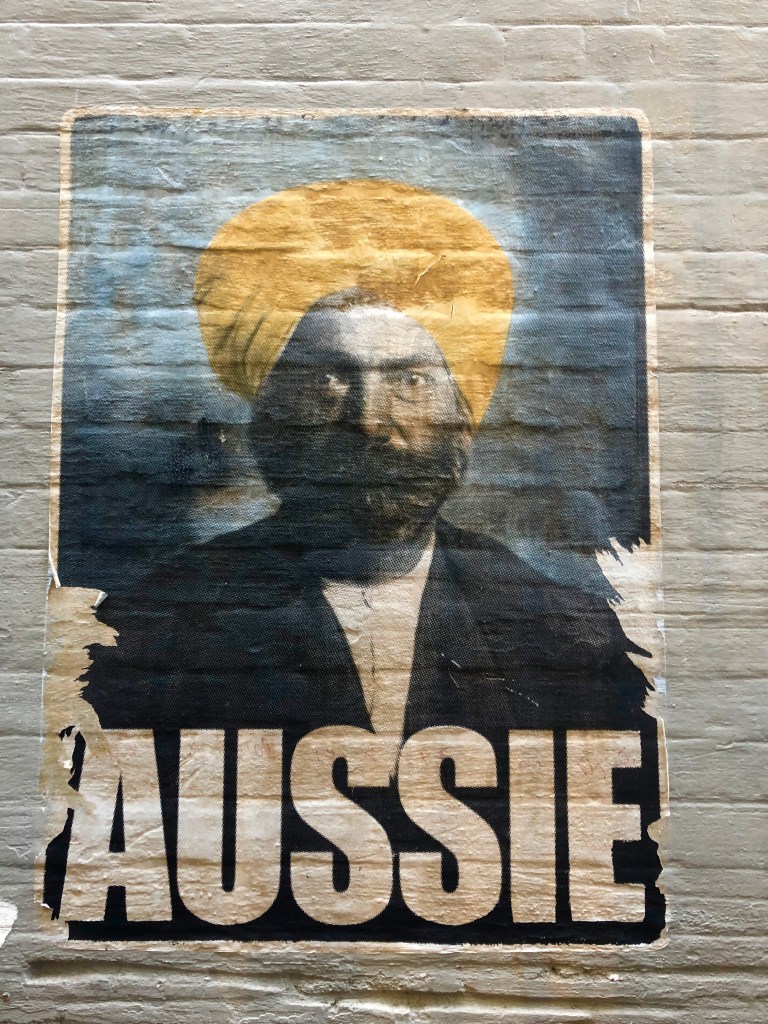
Another first was the recent inclusion in the Gallery is street artist Peter Drew’s ‘Aussie’ posters. These posters, that are prolific throughout Sydney and other Australian urban centres, are on display in the Grand court of the AGNSW.
The inclusion of these artists is a sign of increasing respect for an art form that has historically been dismissed and even identified as vandalism. It is an art form that is slowly gaining people’s attention.
The attention gained is not only driven by the quality of the imagery produced but also the impact that these artists have on the viewer. The context behind their works has often caused controversy. This is the power of street art.
As Australia slowly moves out of the pandemic, we are all hoping things go back to ‘normal’. However, our everyday society has drastically changed. The changes experienced are required so the pandemic can be contained and that we do not mirror the rest of the world.
Today, heading for a night out for dinner at your local restaurant requires a reservation and a login to help contract tracing. A random night out with friends now seems impossible.
This is also reflected in the way we can view artworks. The AGNSW, for example, has initiated restricted and timed visits. The Gallery is no longer freely available for you to pop in and randomly view the collection.
As such, we need to rethink how we view art and what we can do in the future to return it to some normality.
One artform that can offer us a creative solution is street art: unlike the white space of formal galleries, we can view street art in the open and is accessible by everyone.
As I have been documenting the artform for years, one idea that has emerged is an equivalent of the Archibald for the street? Not a festival but one that uses the urban environment to display portraits of people who deserve to be recognised for their contribution to the community.
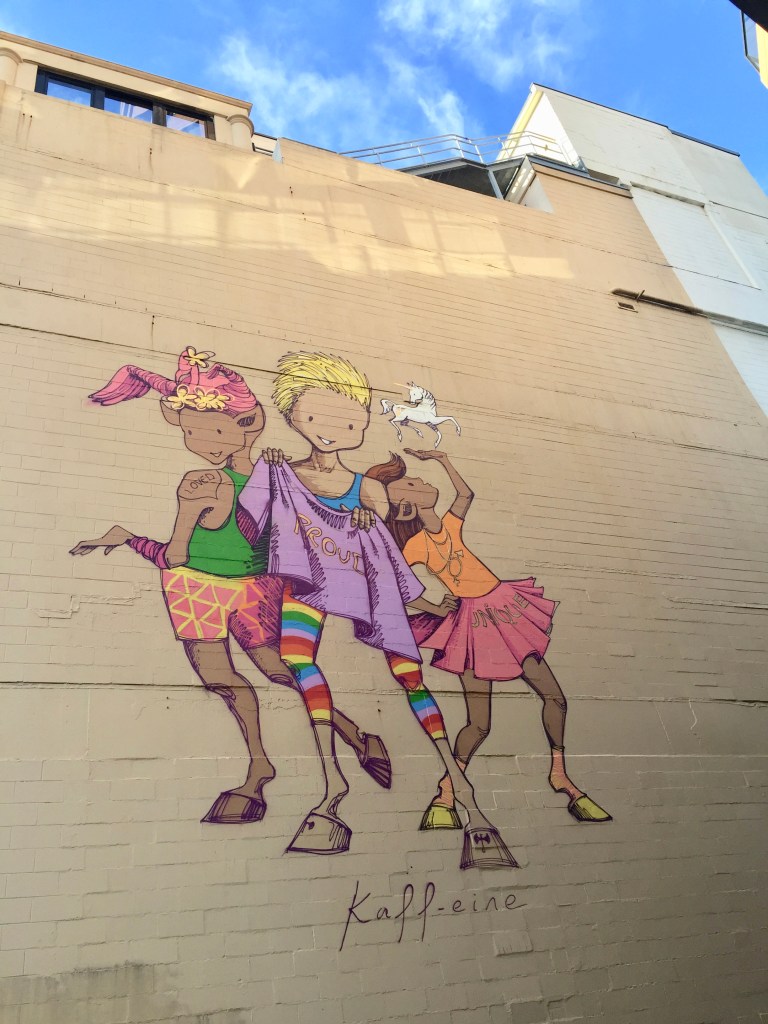
In 2016, the ANZ Bank was one of the major sponsors of the Archibald Prize while simultaneously sponsoring the Inspiring locals project. This was a project that collaborated with four street artists to paint portraits of people who are creating positive impact within their own communities: my blog on this is available here.
Could this be something we revisit? Using the same space every year to create an outdoor Archibald?
In my latest article published for Global Media Journal, I argue that artworks in the urban environment activate space. The art form has a way of activating space not only by providing art in the everyday but by engaging with the local community in which it is situated.
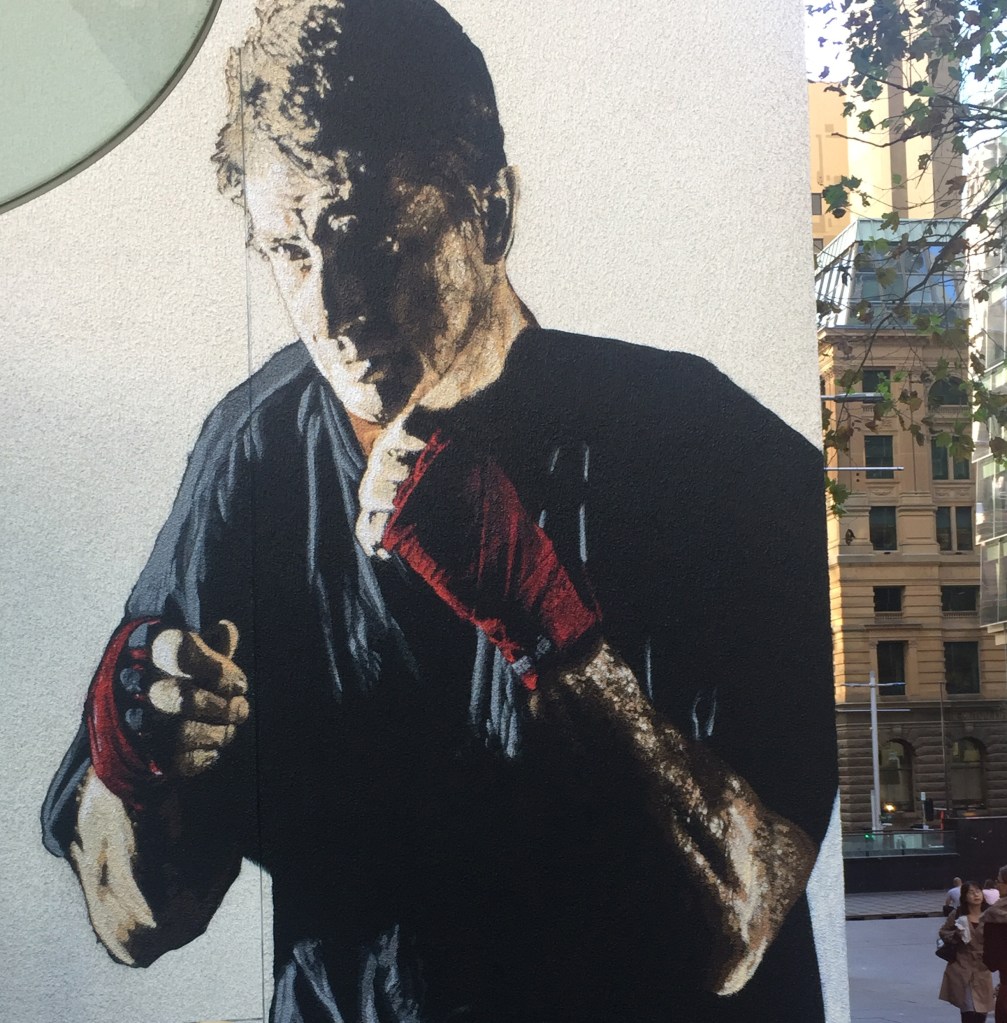
Much of the world has been inside most of this year and enjoying the outdoors is something we no longer take for granted. The outside is the place to be and we should embrace the local areas by giving street art a space.
We will not only create art in the everyday, it will re-activate the streets.
 Alix Beattie: Street Art Researcher