
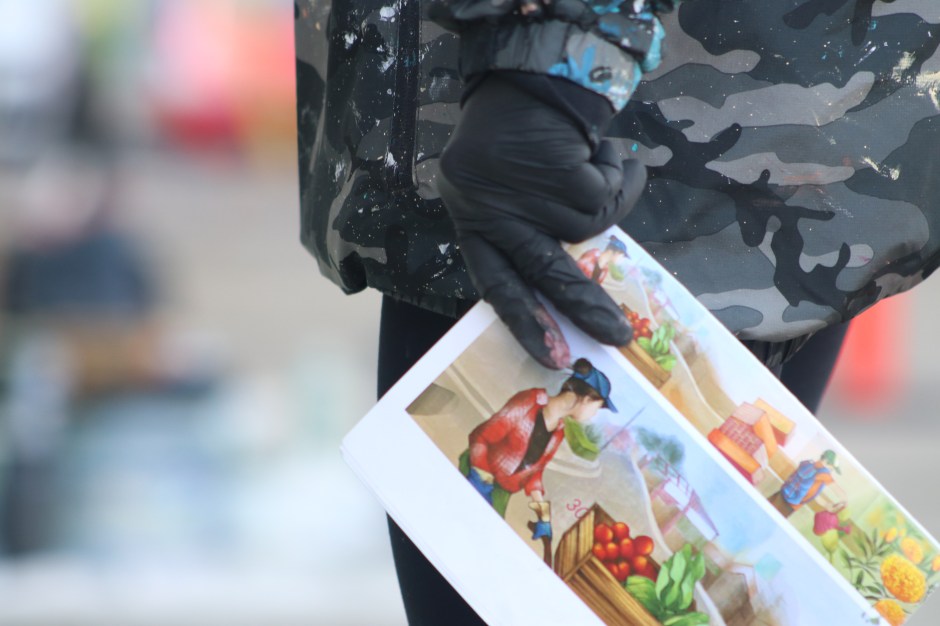
My research is inspired by German philosopher, Martin Heidegger, and his concept of the threshold moment: moments of disruptions that we experience that can change our view of the world. I apply this concept to street art and the way viewing art in the everyday can disrupt the way we see the world.
I have been drawn to street art for over a decade but surprisingly, I experienced my own threshold moments while undertaking this research.
This research has focused on the work of three artists: Claire, Zoe and Styna.
My work with them created moments that re-shaped my reflections and has guided me towards new wats of understand the role of the artist and the arts in our lives.
Claire | Blackheath NSW
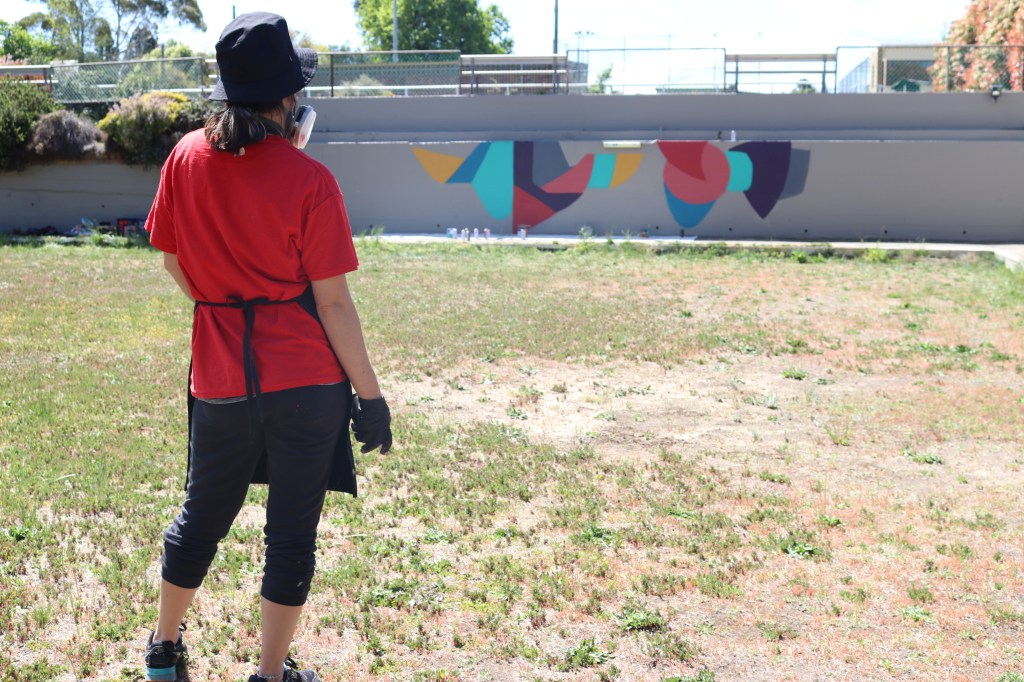
I worked with Claire in the middle of summer in the Blue Mountains. On the days I documented her work, the heat was intense which made the work of the artist difficult. There was also a Plover bird that had decided to nest right next to us and swooped and squawked whenever we got too close.
The threshold moment for me emerged when watching Claire paint: it was like watching a chess player negotiating their next move as she was creating the mural.
While she had an idea in her head and a set colour palate, the rest of the creative process revolved around her feelings and how each section changed the sense of what she wanted to achieve. As an abstract artist, she was negotiating the shapes and colour, walking back and forth from the mural – reflecting on her progress and thinking about her next move.
This moment allowed me to understand and reflect on her creative process and the intensity of her concentration when creating artworks. Despite the heat, flies, Plover bird and passing traffic, Claire was so focused as she brought her living vision to life. This provided me insights into the process of the creation.
Zoe | Westmead NSW
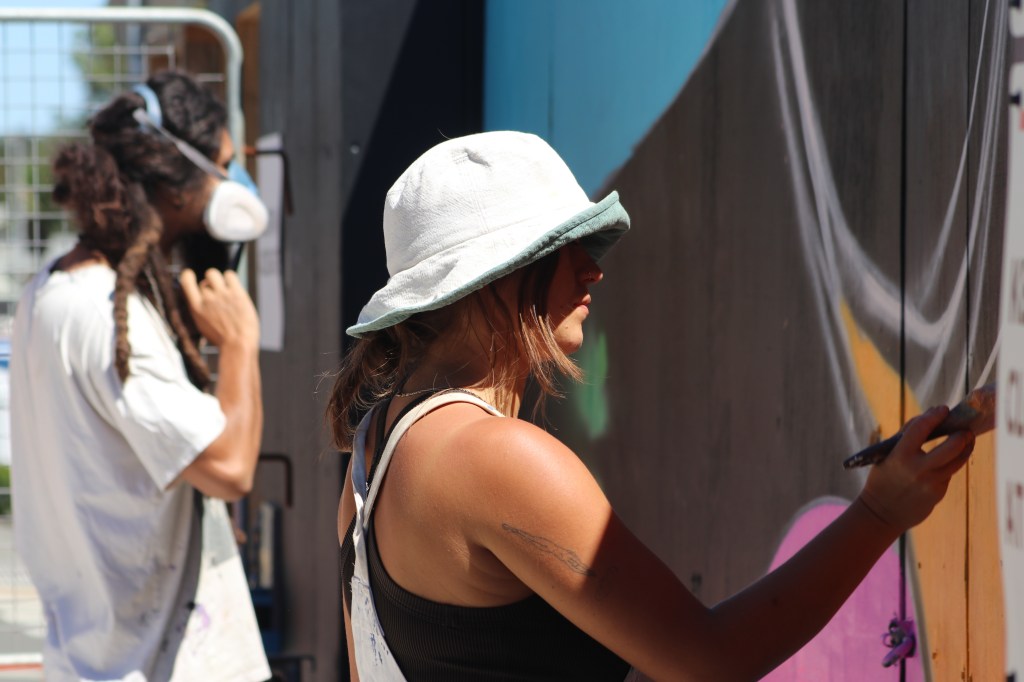
Zoe worked alongside her brother, Xander, to create three murals around the hoarding of the building site of the innovation quarter at Westmead. Again, this mural was created in intense heat, but this time we were surrounded by concrete and had little shade.
I watched Zoe interact with audiences which highlighted the unique experiences of female artists. Zoe had led the project, coordinating the project with Westmead Children’s Hospital to draw up the concepts and was the key driver in the project which involved workshops with multiple groups of children and young women. Xander had little to do with this and was there to help execute the mural.
However, frequent interactions between passing members of the public and the artists while painting the mural saw all the praise directed towards Xander with comments like, ‘“looking great dude”. Zoe, who was painting, was often ignored and received no recognition.
This threshold moment for me emerged as I saw the issue of gender equality within the arts play out in front of me. When discussing this with Zoe, she said that Xander will be offered beer and she is often seen as his assistant.
These insights reminded me of the initial inspiration of my research: as a way of creating a space for more recognition and documentation of female artists and their work.
Styna | Bankstown NSW
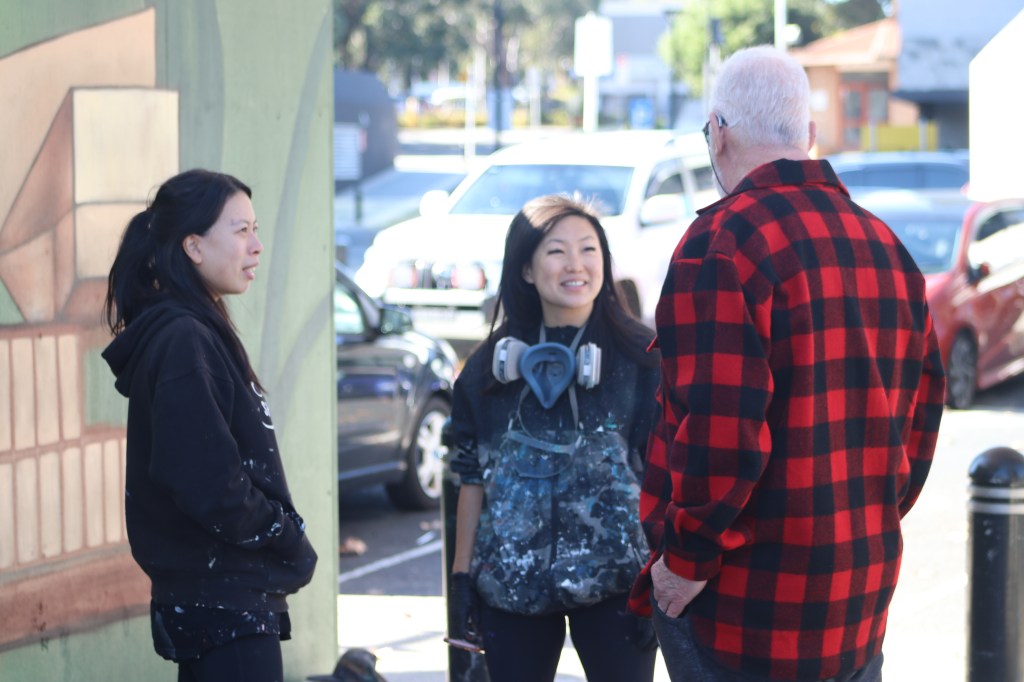
Styna painted a 50-metre mural on the hoarding surrounding the construction site of the new Western Sydney University Bankstown CBD campus. The mural was completed over three weeks, and I was able to spend time with Styna while she was creating the mural, also enjoying coffee and lunch breaks together.
The threshold moment for me was watching the audience interacting with mural: watching others experience their threshold moments.
For example, one part of the mural depicts an image of a woman and her child walking hand in hand, and they are both wearing hijabs. I witnessed a moment of interaction with a young girl that looked at the imagery and ran over to her mum with the biggest smile and said, “look mum the girl is wearing a head scarf just like me.’ The mother was also fascinated by the mural and the positive depiction of the Muslim family.
This was such a precious moment to witness and the importance of creating murals that are inclusive and, confirmed the need for my project, Refracted Cubes. To have a space available that not only explain the imagery but to help connect to the audiences who are viewing these works in the everyday.
By having these threshold moments, I was able to learn, reflect and gain new insights into the importance of having art in the everyday and the unique insights offered by female artists.
 Alix Beattie: Street Art Researcher