I am a Street Art Appreciator who is undertaking my Masters of Research at Western Sydney University. I work for an art gallery based in Sydney when I am not researching. My aim in life, to help people engage and acknowledge the amazing amount of street art that we are surrounded by.
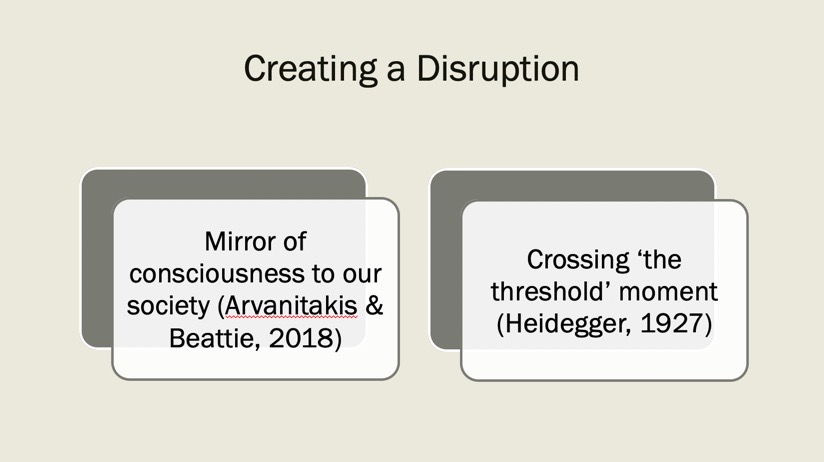
My research is inspired by German philosopher, Martin Heidegger, and his concept of the threshold moment: moments of disruptions that we experience that can change our view of the world. I apply this concept to street art and the way viewing art in the everyday can disrupt the way we see the world.
I have been drawn to street art for over a decade but surprisingly, I experienced my own threshold moments while undertaking this research.
This research has focused on the work of three artists: Claire, Zoe and Styna.
My work with them created moments that re-shaped my reflections and has guided me towards new wats of understand the role of the artist and the arts in our lives.
Cooperation, partnership, alliance, and synergy are all words that describe ‘collaboration.’
The etymology of ‘collaboration’ is a combination of Latin and French phrases that come to represent the “act of working together, united labour”
Collaboration is a word that I have used from the beginning of my research: wanting to work with the artist to create a space for information to be available for audience when viewing their artworks in the everyday.
My research applies a Heidegger concept of ‘crossing the threshold’ (1927/1962). This threshold moment is created by a disruption of thought. I argue that this disruption of thought occurs when you view artworks unexpectedly. One minute you a walking down the street thinking of one thing and next you see a mural that has turned the urban landscape into a canvas. The viewer may be captured and wonder about the meaning behind the work? The ‘affect’; Do I like what I see?
My project, Refracted Cubes, is about curating a space for audiences to find out more about artworks that penetrate the everyday – with a specific focus on street art murals. This research allows viewers to delve past the imagery and into the space of understanding the artist’s concept behind the work.
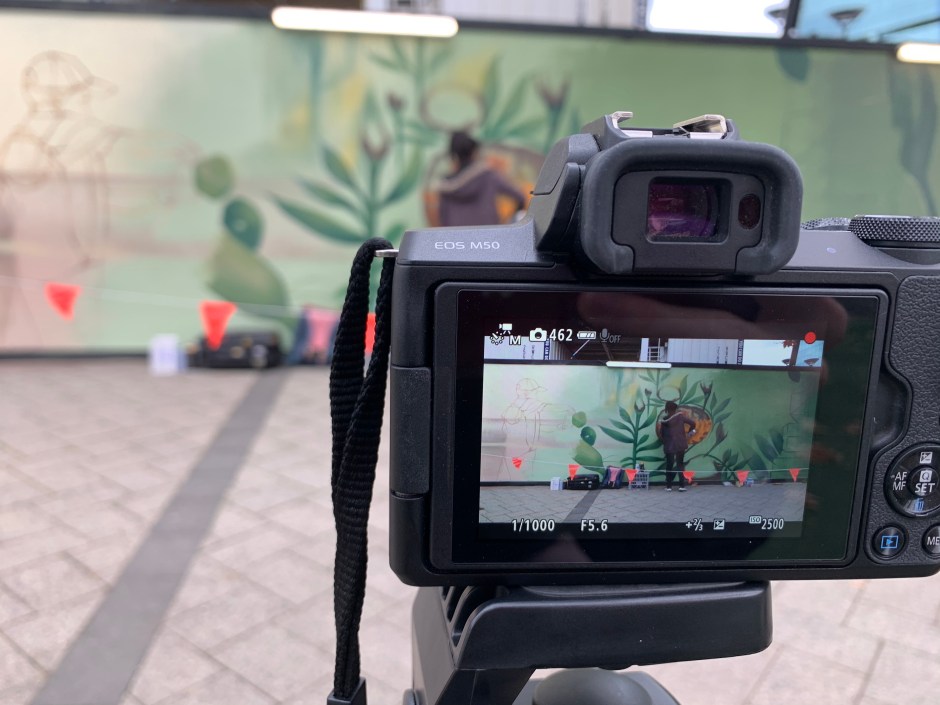
I documented and curated Refracted Cubes with three artists as they created their murals. The documentation aspect was a journey of discovery for me. I learnt that artists who work in the urban environment can find conditions difficult to negotiate: the weather, the facilities, and the interactions with audiences – sometimes friendly but potentially volatile – all need to come into play when creating murals.
The annual Archibald Prize is the most prestigious portrait competition in Australia and hosted by Sydney’s Art Gallery of NSW (AGNSW). The exhibition also includes the Sulman Prize (genre or subject) and the Wynn Prize (landscape).
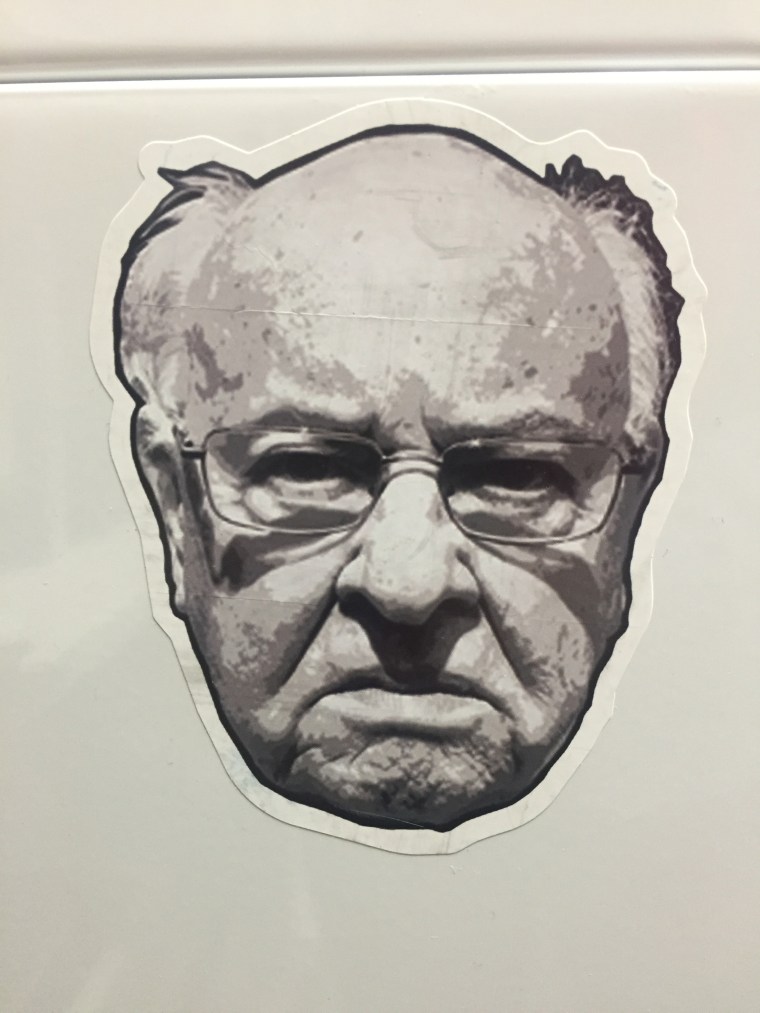
Sticker of Luke Cornish’s Father Bob | Image by the author
The Archibald Prize began in 1921 and has captured a following of artists and art enthusiast for decades. The portrait, as stated on the AGNSW website, is required to be ‘…preferentially of some man or woman distinguished in art, letters, science or politics, painted by any artist resident in Australasia’.
The number of entries has increasing annually with 1068 entries in 2020 submitted and only 55 finalists selected.
In 2012, Luke Cornish (aka E.L.K.) became the first street artist to be a finalist of the Archibald Prize with his imagery of Melbourne personality and religious leader ‘Father Bob’ (Father Robert John Maguire).
Canberra is Australia’s national capital and is situated in Australian Capital Territory (ACT). It is home to a number of Australia’s political and cultural institutions including Parliament House, the National Gallery of Australia and Australia’s best science museum, Questecon.
It is a planned city notable for how well maintained it is: clean, walkable and visually pleasing to visitors and locals. Whilst a quiet city when compared to other Australian cities, it comes alive during parliamentary sitting sessions.
The ACT State Government recently launched an urban public art project. It began by issuing grants to local street artists for murals and different projects that encompass urban art. These initiates aim to enhance the community through engagement of both the artist and the people that use Canberra’s public spaces.
I created this video for the Visualise Your Thesis competition at Westerns Sydney University in August 2020. The aim of the competition is to create a one minute video explaining your research.
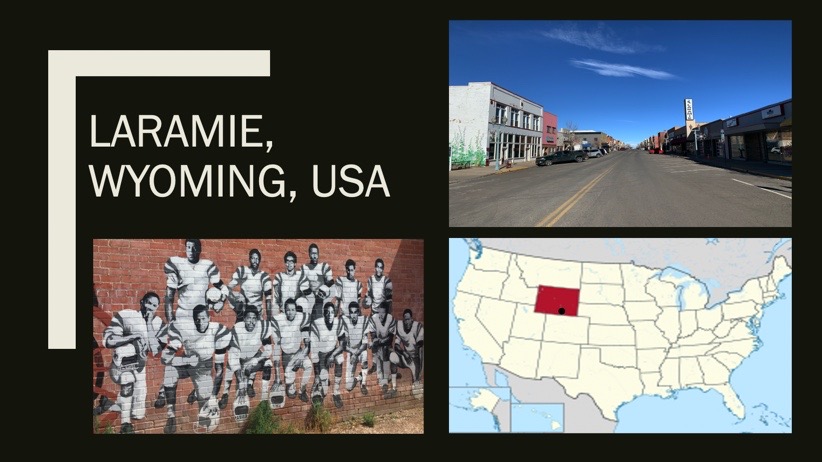
The presentation is part of my broader Doctor of Creative Arts project that is on contemporary Australian street artists and how street art creates a disruption in our everyday experiences of the urban environment. This case study presented was based on my research was conducted in Laramie, a small town in Wyoming, USA.
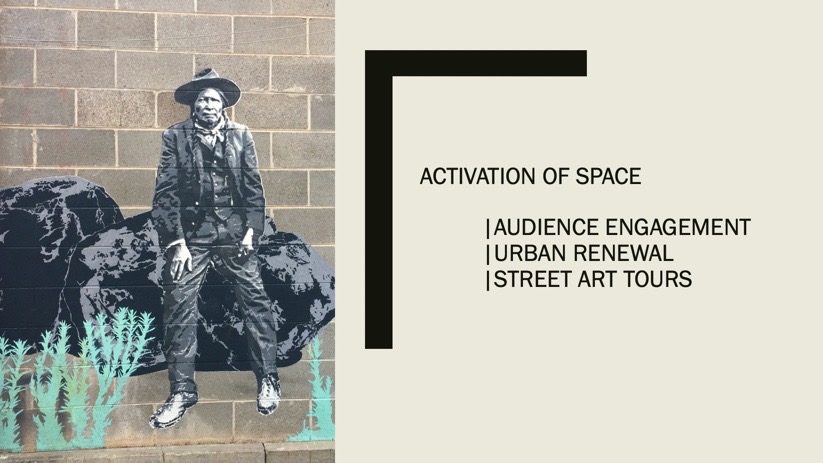
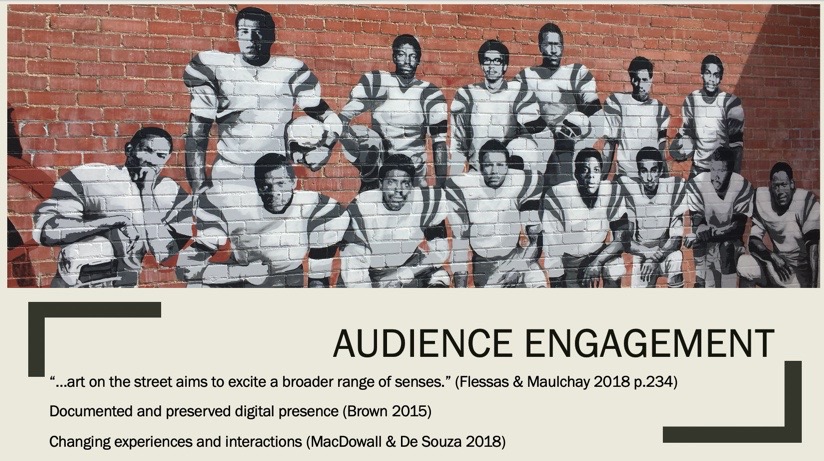
In the paper that this presentation draws from, I argued that street art can be used to create an ‘activation of space.’ This can happen through the art, the engagement with the audience and the way that events such as stress art tours build around the art works.
The paper was submitted to the Global Media Journal and accepted for publishing with changes. The changes requested focused on further developing the theoretical framework around this concept of disruption. In arts and practiced based doctorates, theory engagement often follows the artistic component. As my artistic component has been delayed because of the global pandemic, this forced me to develop theoretical work before my field work.
As such, while I found this challenging, the case study of Laramie allowed me to further my understanding of street art theory and further develop my theoretical background for my PhD.
This article now re-submitted, is not linked to a conference, so I presented the paper to my supervisory panel via zoom.
Reflection about the presentation
The presentation was chance to present the development of this new theoretical framework and was well received by my supervisory panel.
I do not enjoy public speaking – I even found presenting to my panel nerve racking. However, presenting via zoom was easier than giving the talk in person – not as many eyes on me in comparison to a normal presentation.
My supervisors provided feedback about my theoretical framework as we discussed how to structure the multiple threads of my thesis in my Doctor of Creative Arts exegesis. The panel asked multiple questions about the development of my theoretical work as well as the case study. providing constructive criticism of how to structure my argument.
As a presenter, it is always difficult to judge your own performance. Overall, however, it went well though I still got nervous in parts and stumbled over a few words.
I understand the importance of public speaking and how vital it is to have these skill sets for future job prospects. Specifically, to be able to translate your research in an accessible way.
As a PhD student who has no interest in pursuing an academic career, I have not applied for conferences. As such, having to do a presentation for the GCREDI is very helpful as I learnt to translate the paper into a talk. This allowed me to have fun (especially with the imagery), to unpack the case study, and outline the theoretical framework.
I think the only regret of the presentation was that I did not record it. Honestly it did not cross my mind and personally I think it is a missed opportunity. It would have been great to review my own performance – even though watching yourself is cringy – I would have been able to learn from the experience by seeing myself talking. This could have been an excellent way to look at my presentation skills and improve through watching myself speak.
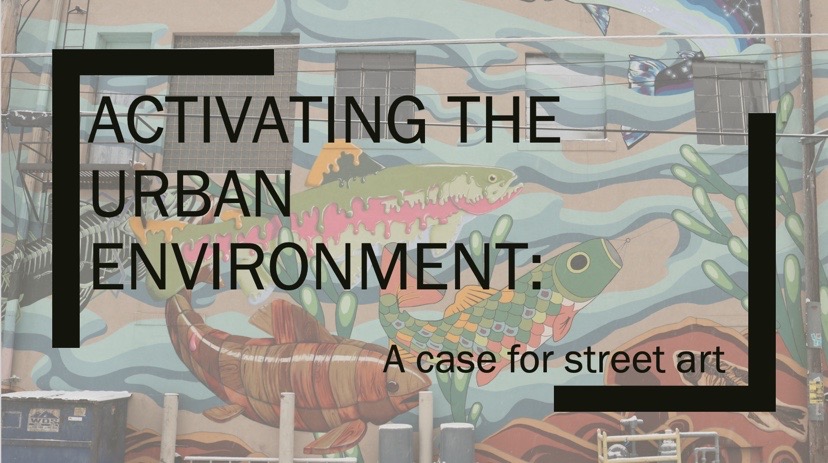
Activating the urban environment: A case for street art
Street art is a visual megaphone for ideas, thoughts, commentary and information. While artists have always acted as a mirror to society’s big questions, what makes this art form unique is that it is a voice in public space.
It is also a medium that can work in ‘real time.’ For example, a piece by Australian artist, Scott Marsh, appeared in Chippendale Sydney recently. This artwork is a response to how the Australian government handled the devastating bushfires of 2019/2020.
This artwork catches the audience’s attention both with its visual impact, but also by asking us to contemplate and reflect about the events – not just the devastation caused but the power structures that has made climate change policy inaction a dimension of Australian political life. Marsh’s work asks us to begin conversations about conservation, prevention and assistance to those who need help. In this painting it creates a voice for those victims that may have been forgotten.
We can compare the way street art captures audience attention from the way an audience interacts with an artwork in a traditional gallery setting. Entering a museum space – you see what is presented to you on the walls: curated information and context and specified a way to be guided through the museum, creating ‘docile spectators’ (Flessas & Maulchay 2018). In contrast, artworks that break the traditional space of the gallery setting allow artists to create works that are guided by their own intentions and thoughts.
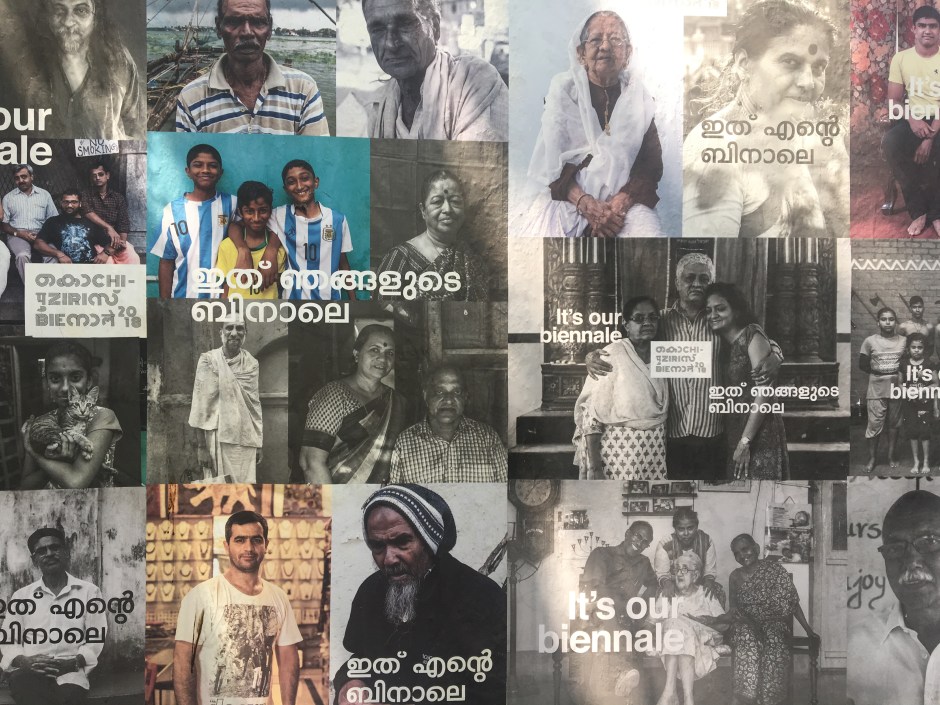
In January 2019, I attended the Kochi-Muziris Biennale – the largest art exhibition in India. The exhibition ran for 3 months in multiple venues throughout Fort Kochi, Kerala.
The theme for the Biennale was Possibilities for a Non-Alienated Life.
Embedded in this theme was ‘inequality’ – a theme that continues to resonate around the world. The artists challenged the audience to consider, how do we create a space that creates opportunities for all?
Such a question is more relevant than ever during this COVID 19 pandemic.
The works exhibited during the Biennale were politically driven. Exploring issues around colonization, gender equality, human rights and the impact of natural disasters on the local community. This last point was particularly relevant for local communities as Kerala was flooded through the monsoon season in 2018, many homes were lost and 433 people died. This crisis resonated through multiply works in the Biennale.
The curator of this Biennale, Anita Dube, wrote:
“If we desire a better life on this Earth — our unique and beautiful planet — we must in all humility start to reject an existence in the service of capital. Possibilities for a Non-Alienated Life asks and searches for questions in the hope of dialogue.”
It is the hope that we as people can create a space for equality that crosses divides. Creating a space where people can talk and find solutions to some of the grand challenges confronting us.
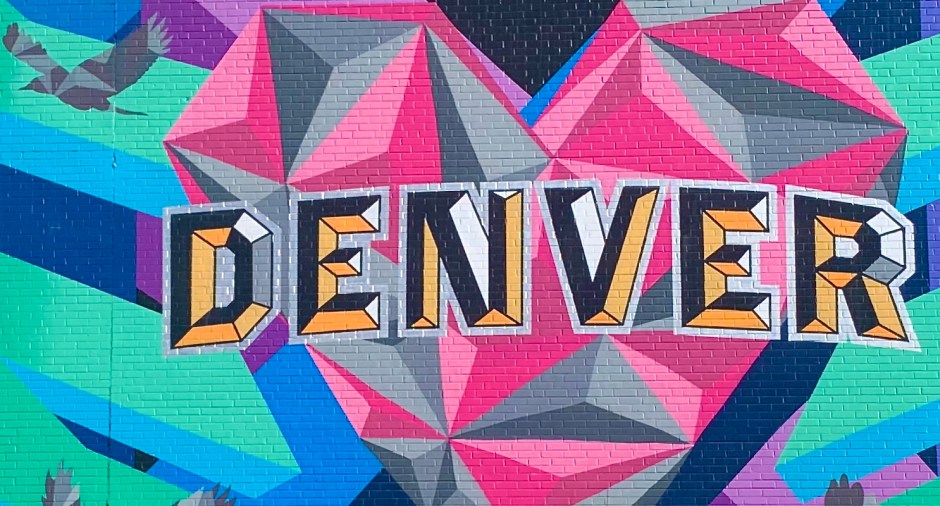
Whilst living in the USA over the past year, I visited Denver, Colorado on multiple occasions. It is a city filled with public art: from some of the small neighbourhoods to the central business district (CBD).
The CBD is particularly filled with public art, creating space for people to experience art in the everyday. Most of these artworks have plaques accompanying them, displaying either artist/artwork information or the reason for their existence.
Among these public art pieces are artworks by local street artists and graffiti writers. However, to view the street art and graffiti, you needed to venture into the alleyways and go searching for these hidden gems.
This is often the best part of street art and graffiti – the search for the prize.
While researching street art festivals in Denver, I came across the suburb of Five Points, the home of Crush a street art festival that has just celebrated its 10th anniversary in creating a vibrant art filled neighborhood.
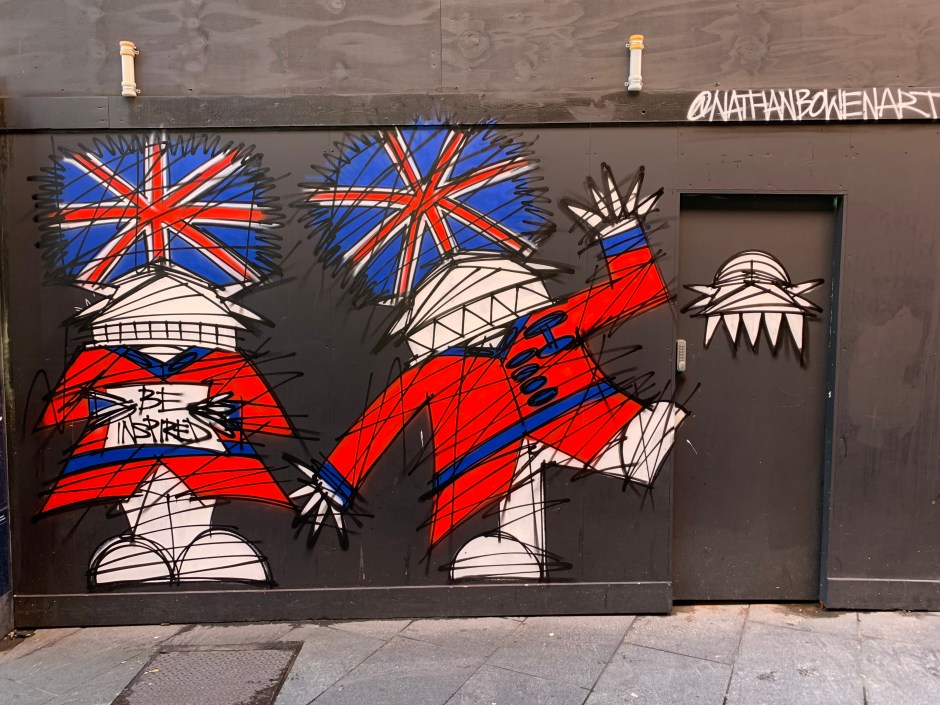
Shoreditch,
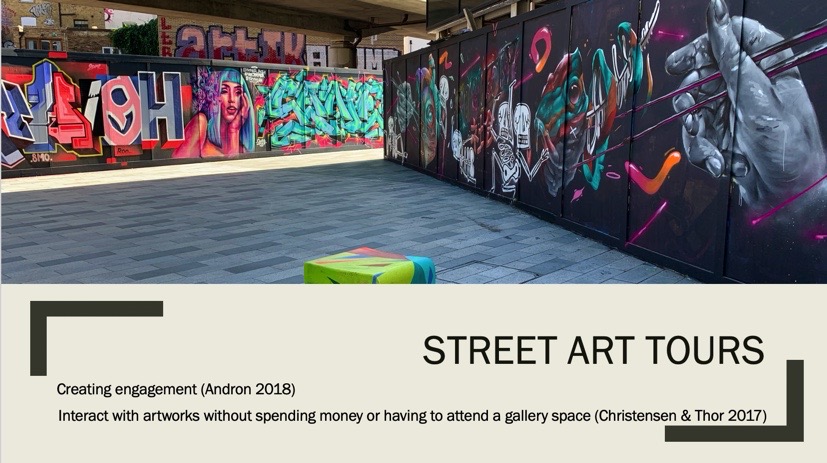
is a suburb in London that embraces street art and graffiti: wall upon wall is
covered with tags, pieces, murals, sculpture and paste ups. It is a feast for
your eyes and moves between stylized pieces and vibrant imagery, to political commentary
about what is happening around the world (including some not so complementary
images of Boris – the UK’s Prime minister).
To my
surprise, there are also a significant number of paid advertising images: that
is, corporations paying artists to paint a wall instead of using a traditional billboard.
While recently
visiting London as part of my research, I was inspired by an article that
discusses the role of street art tours. Andron
examines the function of the street art tour industry and argues that, these
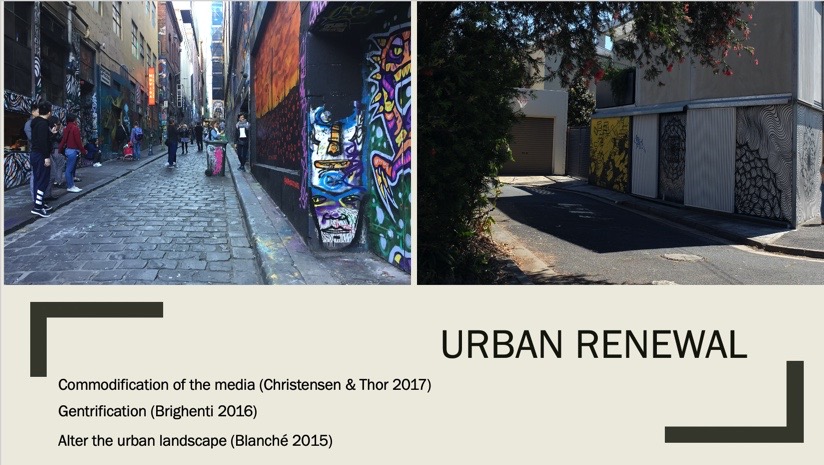
operators are creating a “touristifcation and gentrification” of the subculture
and the environment that… (they) exist in (2018, p.2).
In
reflecting on Andron’s arguments, I contemplated whether this was problematic
or beneficial to local suburbs? Do these tours benefit the local economy by bringing
in additional people to the suburb who would otherwise not visit?





 Alix Beattie: Street Art Researcher