Kuhn-&-Popper

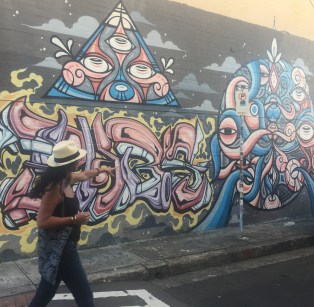
Sofles Feb 16 Newtown
Sofles –  Newtown 2016 – Photo by author

This first semester of my Masters of Research (MRes) is about becoming a researcher and aiding me with the tools to write. Someone described it as learning how to run a marathon!

My research area is focussed on female street artists and how they view themselves within this art practice.

The course is well structured in regards to the topics, the history of your field, collection of data, how to analyse this data and so on.

One of the assessments is a journal that you discuss the weekly topics. In responding to one of my posts, my lecturer Dr Jack (the sauna) Tsonis challenged me so I thought I would respond here. Continue reading “Kuhn-&-Popper”
Street-Art-literature-Review

IMG_6388
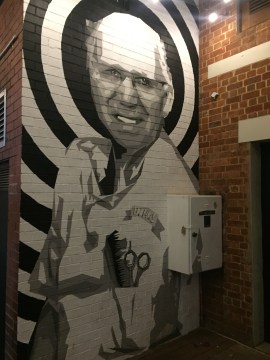
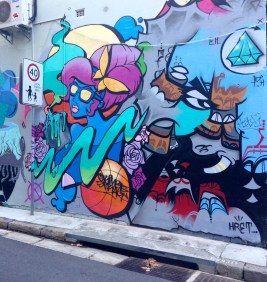
Artist unknown- Adelaide 2016-Photo by author

Recently I undertook a literature review for my Masters of Research.

This allowed me to delve into my research field and look at the literature surrounding my topic. I found there was limited research particularly when looking at female street artists. There was information on individual artists, however, a discussion on the gender imbalance within the sub-culture seemed to be missing.

Common research surrounding street can be grouped into four key areas: the historical context and beginnings of the sub-culture  (Gomez: 1993); more recent research around the legalities (Young: 2013); art in a public space (McAuliffe: 2012); and, the engagement of street art within the community and how it is used as a tool for discussion (Hansen & Danny: 2015). Continue reading “Street-Art-literature-Review”

Freewriting

HRET Mar 14
HRET-Redfern 2014 – Photo by author

Rosenwasser & Stephen’s (2014) concept of ‘freewriting’ encourages the writer within.

The concept of ‘freewriting’ is a method that allows your hands to write what you are thinking continuously for a certain amount of time without editing the work. This allows the mind and hand to work in parallel. All thoughts and ideas are written down without stopping and once the time is over the writer can reflect on the piece and engage with the ideas and thoughts.

Continue reading “Freewriting”

Linguistic-Socialisation

Melinda copy
Melinda Vassallo discussing street art- artist unknown-Newtown 2016-Photo by author

Cheryl Giesler (1993: 23) discusses the meaning of linguistic socialisation and the importance of this concept when it comes to research.

What a great term: linguistic socialisation!

Essentially this translates to being able to speak and understand the language of your discipline. That is, to become ‘socialised’ with the specific linguistic conventions of your field and to be able to understand the language used in articles, seminars, lectures and other academic publications.

To be able to place the language of your academic field and put it in the correct context is vital to your research. This is essential as all areas of research have their own meanings of text and it has the capability of changing across disciplines. Continue reading “Linguistic-Socialisation”