Street art: commentary on society or a reflection of society

Street art as a megaphone

Street art is a visual megaphone for ideas, thoughts, commentary and information. While artists have always acted as a mirror to society’s big questions, what makes this art form unique is that it is a voice in public space.

It is also a medium that can work in ‘real time.’ For example, a piece by Australian artist, Scott Marsh, appeared in Chippendale Sydney recently. This artwork is a response to how the Australian government handled the devastating bushfires of 2019/2020.

Scott Marsh, Chippendale, Sydney 2020
Image from artists Instagram account

This artwork catches the audience’s attention both with its visual impact, but also by asking us to contemplate and reflect about the events – not just the devastation caused but the power structures that has made climate change policy inaction a dimension of Australian political life. Marsh’s work asks us to begin conversations about conservation, prevention and assistance to those who need help. In this painting it creates a voice for those victims that may have been forgotten.

We can compare the way street art captures audience attention from the way an audience interacts with an artwork in a traditional gallery setting. Entering a museum space – you see what is presented to you on the walls:  curated information and context and specified a way to be guided through the museum, creating ‘docile spectators’ (Flessas & Maulchay 2018). In contrast, artworks that break the traditional space of the gallery setting allow artists to create works that are guided by their own intentions and thoughts.

Continue reading “Street art: commentary on society or a reflection of society”
Street Art &Turkey

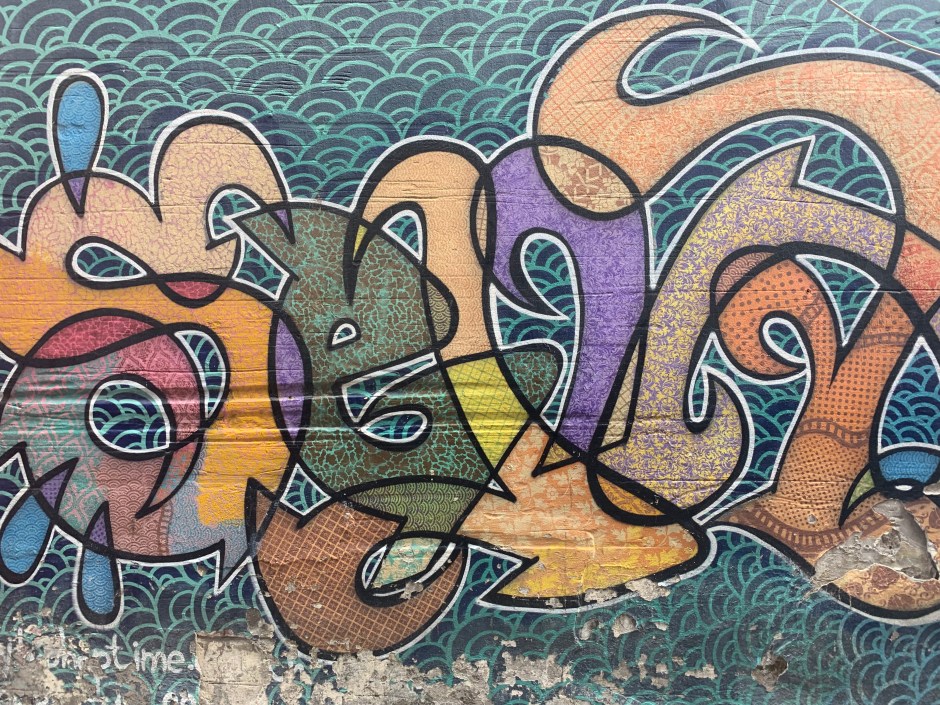
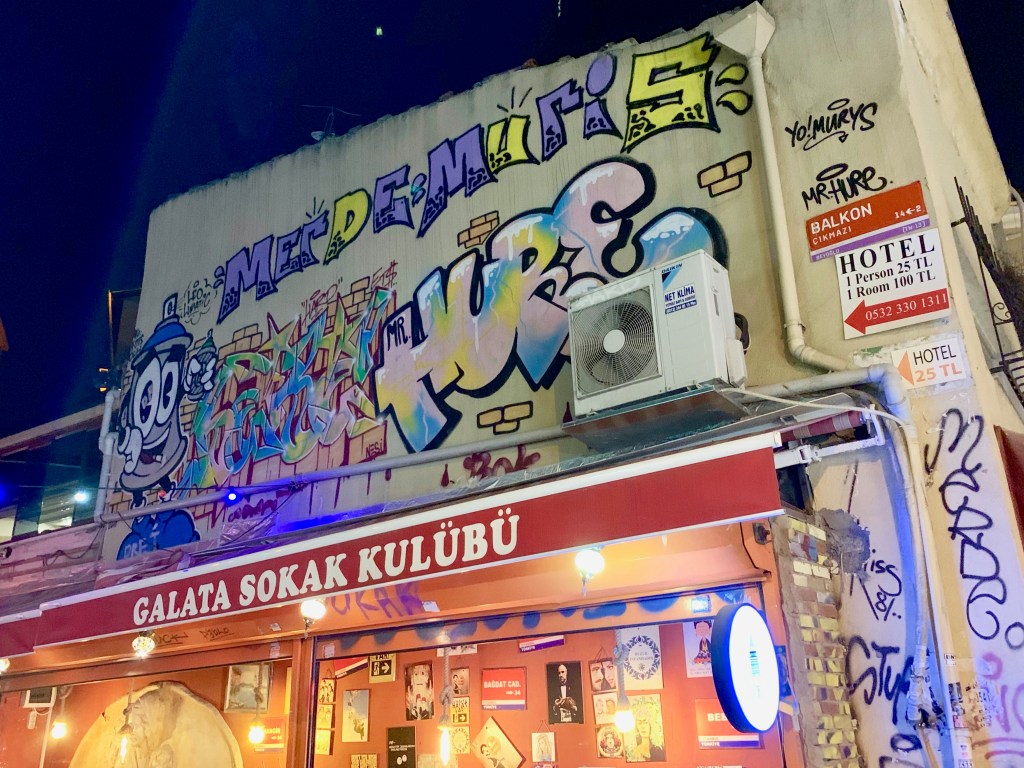
I recently visited Turkey to undertake some research around Istanbul’s street art.

Istanbul is a vibrant city with deep traditional and contemporary culture including an energetic night life. The city is a visual delight, so much to see from the vocal shopkeepers to the food culture, the smell of Turkish coffee and the street animals (so many cats) that are well fed and seem well cared for – something that is rare from what I have witnessed in my travels abroad.

Various pieces | Istanbul, Turkey | 2019 | Photo by the author

I was captivated by the graffiti written all over the streets, juxtaposed against old buildings within the city.

Studying street art, in its many forms, has meant my eyes are now accustomed to looking for some form of communication that invites me to become embedded into the urban landscape. An escape from the everyday, this disruption of thought – particularly when experiencing a new city where everywhere you look you see different and new things. I still see the art that jumps out at me from the street – this visual megaphone of information.

Continue reading “Street Art &Turkey”

An ephemeral artwork that continues to live through the internet

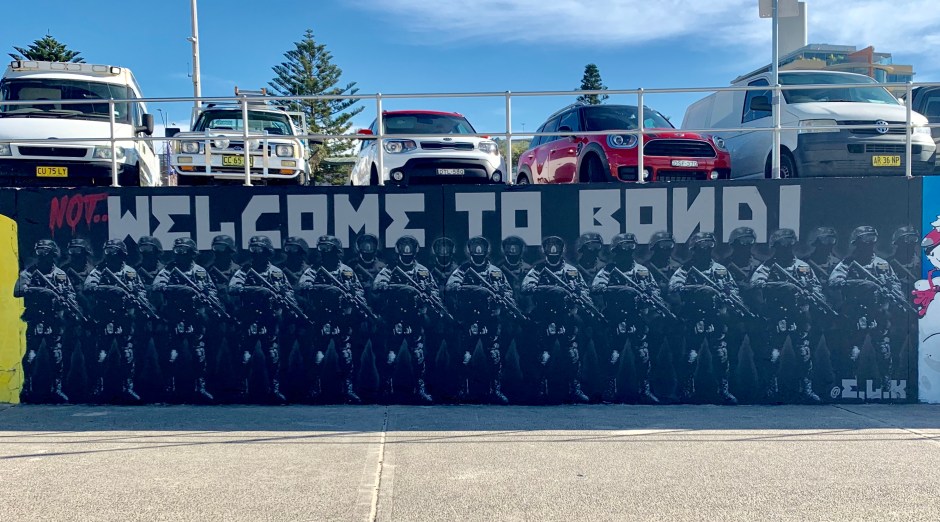
Mainstream media outlets in Australia recently focussed on a controversial work by stencil artist, Luke Cornish (ELK). Luke created a mural on the Bondi Beach seawall that generated conversations about the treatment of refugees in Australia, the right to free speech and the impact of artworks that adorn the urban landscape. The imagery of the mural caught the attention of the media, Australia-wide, and the conversation reverberated through social media.

Before continuing, it is important to note that Luke has always confronted controversial topics: from the war in Syria to the impact of the Afghanistan conflict on veterans.

Luke’s mural depicts 24 Australian Border force officers standing in a line with the words “Not welcome to Bondi”. The mural was designed by the artist to create awareness around refugees and asylum seekers. The number of officers stencilled represent the 24 suicides that have occurred in Australian detention facilities – both off and on-shore – since 2010.

Since the late 1970s, the Bondi Sea Wall has been open to artists to submit artworks and, as stated on the Waverley council’s website, the wall “…has featured a mix of street and contemporary art with strong social and political messages throughout the decades.

Continue reading “An ephemeral artwork that continues to live through the internet”

Street Art: Re-shaping audience engagement in the city

Over the last two decades, street art has become an integral part of the urban landscape. While this might seem natural to contemporary readers, it is in fact a remarkable change, given that the history of street art is linked to the criminality and vandalism of graffiti culture. Indeed, many cities around the world now hold street art festivals, signalling the location-based nature of the art form and reflecting its concern with contemporary social issues. 

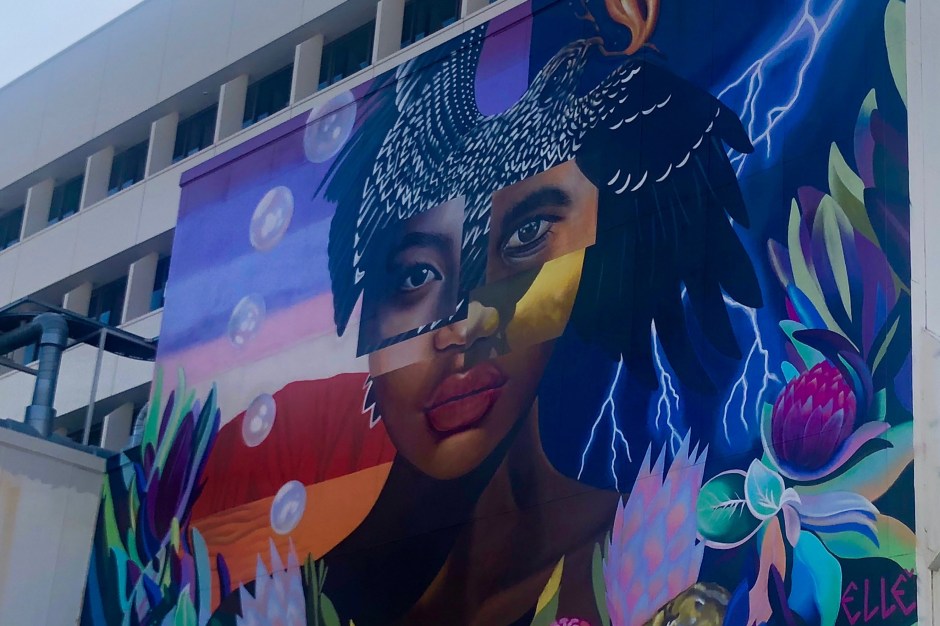
Although all art attempts to communicate, a unique feature of street art is the immediacy of the communication within urban landscapes – not locked away in galleries. One prominent example is Australian female street artist, Kaff-eine, who has an increasing global footprint through her artwork that raises awareness around issues of poverty and LGBTQIA+ communities. 

Continue reading “Street Art: Re-shaping audience engagement in the city”

Can-advertising-be-considered-an-act-of-vandalism?

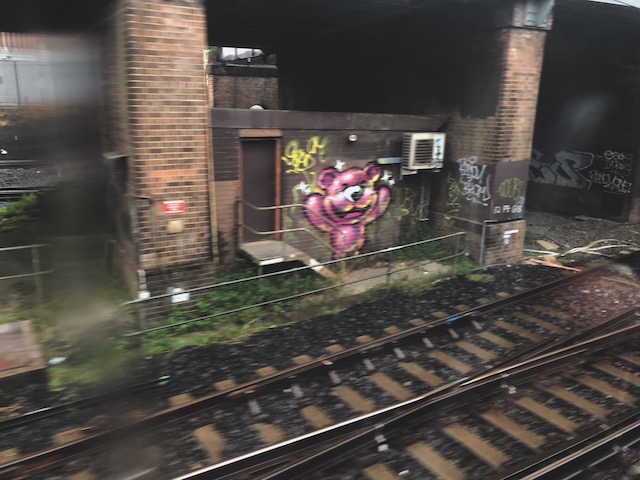
The best part of travelling to my uni – Western Sydney University – is the train journey from Central Station to Parramatta. Viewing ‘pieces’ created by graffiti writers on the walls that encase the railway tracks. The combination of text, characters and symbols that allow the names to jump out of the wall. A blur of colour – depending on the speed of the train – or a slow train that allows for the gallery of work to be exhibited with every detail viewed.

Lotso
“Lotso” |Artist Unknown| Photograph by the author| Sydney, September 2018

Recently, I saw an image on the train that caught my eye: a mural of a bear (which reminded me of Lotso from Toy Story 3). My initial thought was, ‘I want   this image for my instagram’ but I was too slow and missed the shot. I spent the day hoping it would be there the next day – always a risk when you research an ephemeral art form, how long it lasts depends on too many factors.

Whilst waiting on the station the next day,  I watched the train roll in and was silently outraged to see the carriages were covered in advertising – including the windows – making it difficult for me to look out and see passing artworks.

Continue reading “Can-advertising-be-considered-an-act-of-vandalism?”

Street Art-My Definition

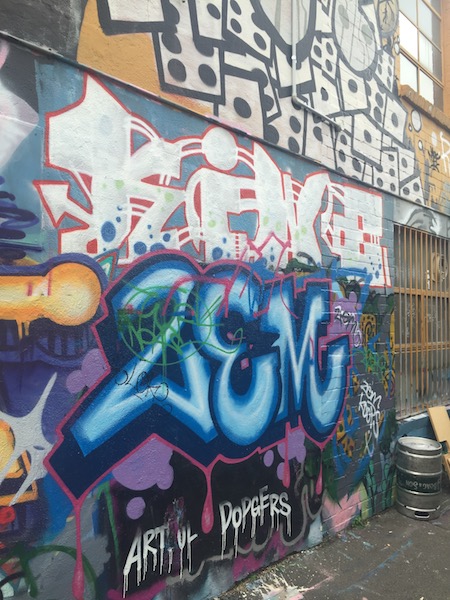
The definition of street art is in perpetual debate – for the art form is varied in both media and imagery (MacDowall, 2014; Wacławek, 2011; Young, 2014). In fact, Dickens (2008) argues that street art can best be described as “post graffiti” (p. 472) – that is, an art form that has extended from the graffiti movement .

IMG_7232
Graffiti| Melbourne, 2017| Photograph Author

Another way to understand street art comes from Austin (2010, p.44), who describes it as “…a fresh and unexpected new skirmish line in modern art”.

To define street art I draw on these three specific qualities that best capture the subculture: artwork, location and audience.

Continue reading “Street Art-My Definition”

Street-Art-A-Feminist-Playground

What words come to mind when I mention ‘street art’? Vandalism? Free speech? Beautiful? Offensive? Colourful?

Whatever your thoughts are on the subject of street art, as with most things in life, we need to look at it from various angles: what is seen as vandalism by someone, is considered an art form by someone else.

What is clear is that more academic research is required to study this beautiful art form. The meanings behind some of these artworks, how they engage with current topics both in Australia and around the world, creating awareness of what is going on in our contemporary world and creating an alternative voice.

Street art has the ability to engage an audience and begin conversations between the artist, artwork and public – something that is both powerful and fascinating. Whether it is a protest piece or commentary on current issues such as society’s obsession with celebrity culture – something I discuss below – these works have the capability to create conversations that resonate through the streets visually.

Some important questions I have found myself asking: Have you ever thought about who paints the art work? Are they male or female artists? Would it change you attitude to the work if you knew the sex of the artist?

Street art is a male dominated movement. Why? Is it because of the frequently dangerous nature of the movement. Works often need to be undertaken at night and in alleyways. Or  is it because of the socially constructed gender role of society that makes this a masculine practice?

Through the article that follows, I discuss how street art creates conversations in the urban landscape, delve into the history of graffiti, introduce the first female graffiti artist, Lady Pink, and discuss how some of the female artists situate themselves within this masculine practice.

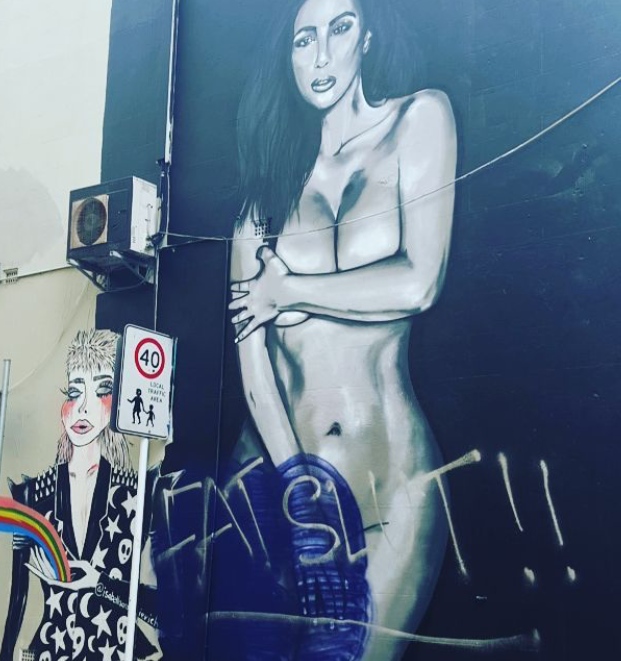
KIm2
Figure 1: Kim ‘the fat slut’ – photo by author


Kim Kardashian is always likely to get you a headline. Her most recent Instagramed nude selfie – or nudie – once again brought the Internet to a standstill as her endless self-promotion lit up discussion boards and gossip columns. Continue reading “Street-Art-A-Feminist-Playground”

Kuhn-&-Popper

Sofles Feb 16 Newtown
Sofles –  Newtown 2016 – Photo by author

This first semester of my Masters of Research (MRes) is about becoming a researcher and aiding me with the tools to write. Someone described it as learning how to run a marathon!

My research area is focussed on female street artists and how they view themselves within this art practice.

The course is well structured in regards to the topics, the history of your field, collection of data, how to analyse this data and so on.

One of the assessments is a journal that you discuss the weekly topics. In responding to one of my posts, my lecturer Dr Jack (the sauna) Tsonis challenged me so I thought I would respond here. Continue reading “Kuhn-&-Popper”